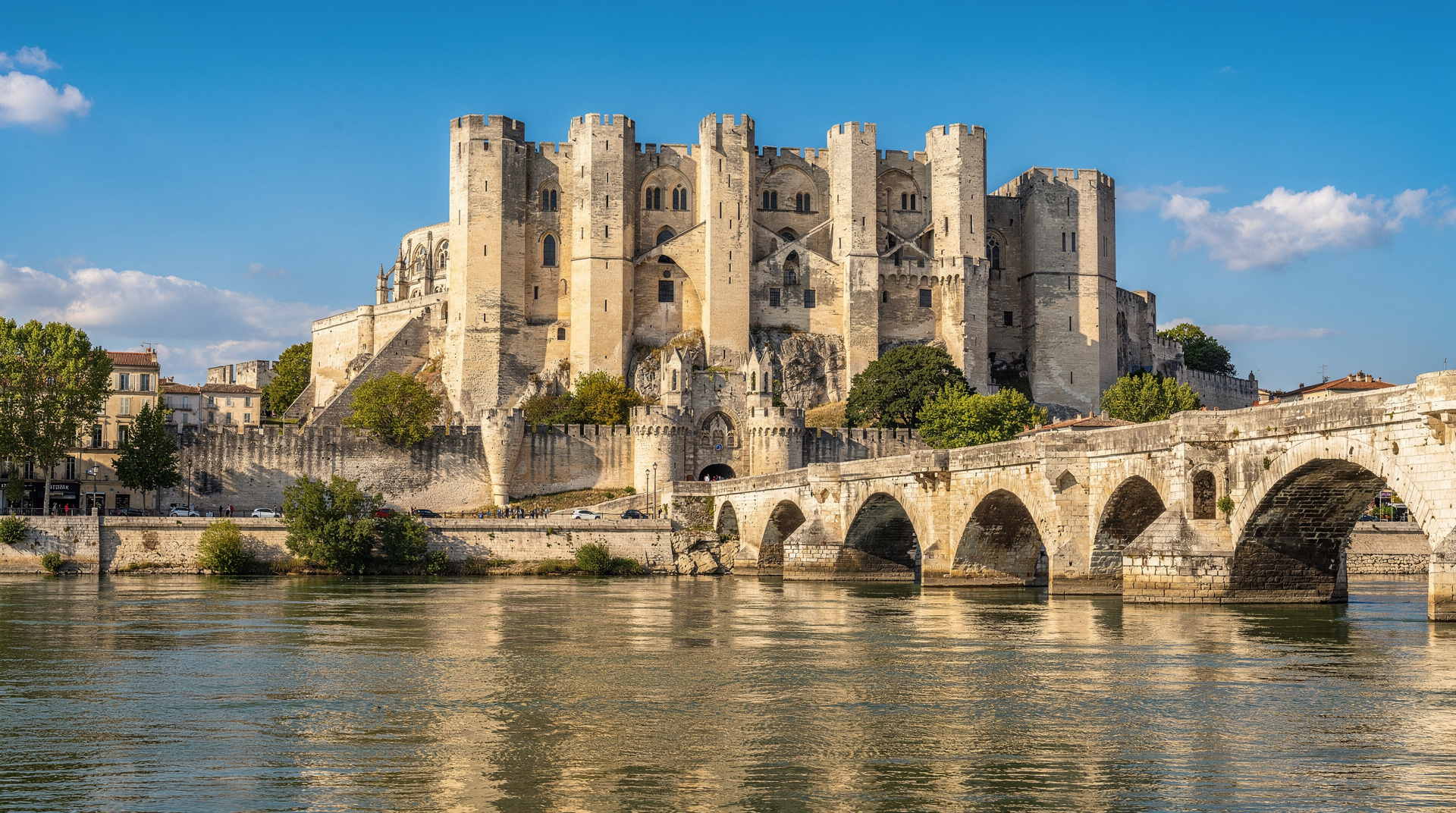
Les Baux-de-Provence and Saint-Rémy day trip from Marseille
From Marseille: Arles, Les Baux & Saint-Rémy full-day tour
Duration: 8 hours
Are Les Baux-de-Provence and Saint-Rémy worth a day trip from Marseille?
Yes — a natural pairing, 30 minutes apart by car. Les Baux has one of the most dramatic clifftop ruins in France plus the Carrières des Lumières (Picasso & Frida Kahlo immersive show 2026). Saint-Rémy has the Roman site of Glanum and the asylum where Van Gogh painted Starry Night. Allow 7-8 hours.
Why these two villages belong together
Les Baux-de-Provence and Saint-Rémy-de-Provence are separated by 10 kilometres across the Alpilles ridge — the low limestone range that runs east-west between Arles and the Luberon foothills. They are different in character: Les Baux is dramatic and clifftop-ruined, Saint-Rémy is a living market town with a literary and artistic history. Together they fill a day perfectly.
Both are in the Alpilles regional natural park, roughly 1h15 northwest of Marseille by car. Neither is accessible by train from Marseille. A car or a guided tour is required.
| At a glance | |
|---|---|
| Where | Alpilles hills, roughly 1h15 northwest of Marseille by car |
| Cost | Around EUR 30-40 per adult for Carrières des Lumières + Glanum + Saint-Paul-de-Mausole entries combined |
| Time needed | A full day, around 7-8 hours door to door |
| Getting there | Car essential — no direct train link from Marseille to either village |
| Best time | Spring or autumn for comfortable walking; arrive at opening in summer to beat the coach groups |
If you are still deciding whether a car day is right for you, our do you need a car in Provence guide lays out the trade-offs, and the Provence road trip itinerary shows how this pair of villages can sit inside a longer loop.
Getting there from Marseille
Drive time: Approximately 1h10-1h20 via the A7 north toward Arles, then east on the D17 toward Saint-Rémy and Les Baux.
Route option 1 (recommended): A7 north to the Arles junction, then D17 east through Fontvieille to Les Baux first. After Les Baux, continue 10 km east to Saint-Rémy.
Route option 2: A51 north toward Aix, then west via Salon-de-Provence and the D99 to Saint-Rémy, and then west to Les Baux. Slightly longer but avoids the A7.
Parking: Both villages have car parks at the base — you cannot drive into the upper parts of Les Baux or much of central Saint-Rémy. Les Baux parking: approximately EUR 5/day. Saint-Rémy has several free and paid parks around the old town ring road.
Les Baux-de-Provence
The clifftop citadel
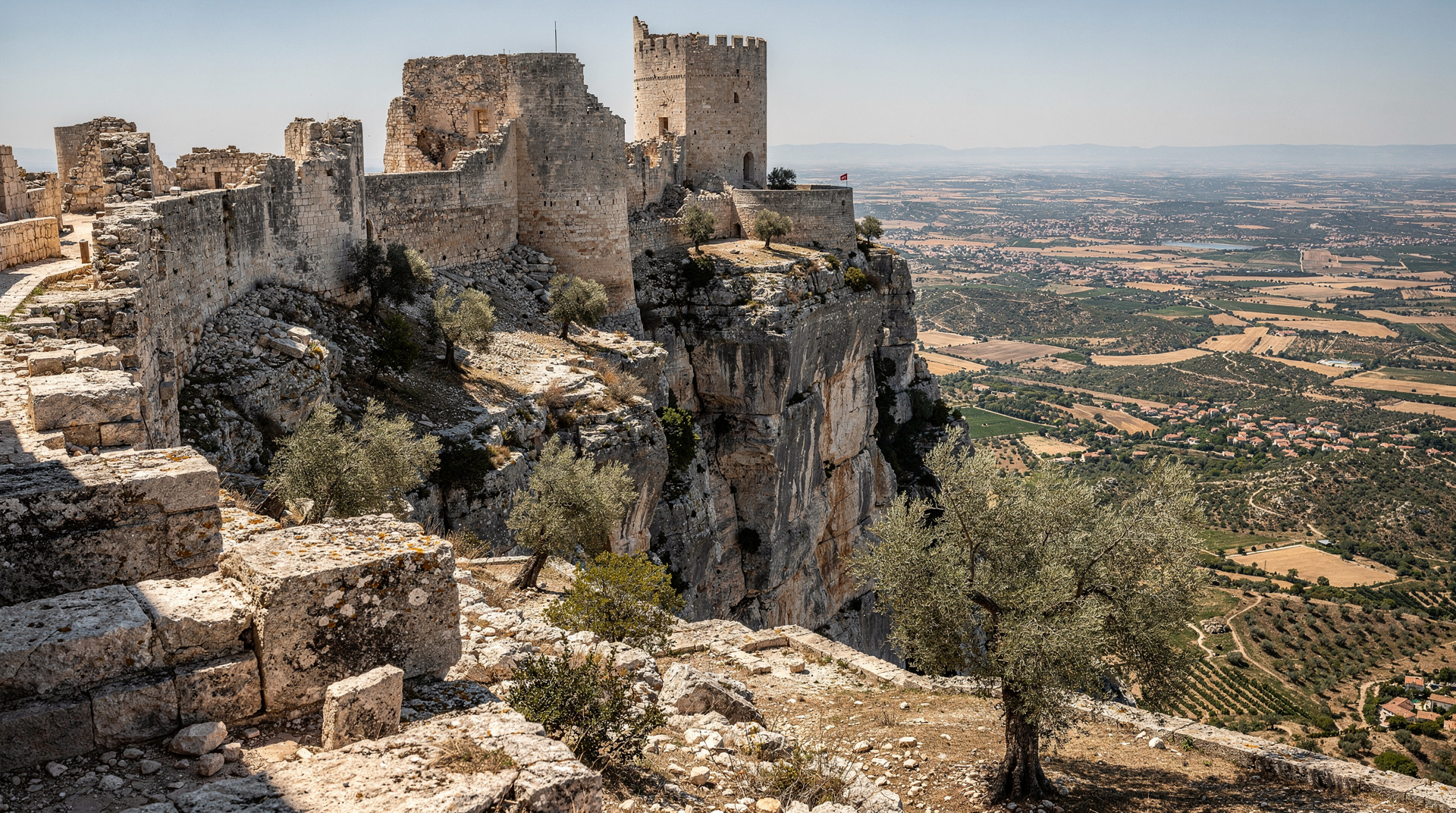
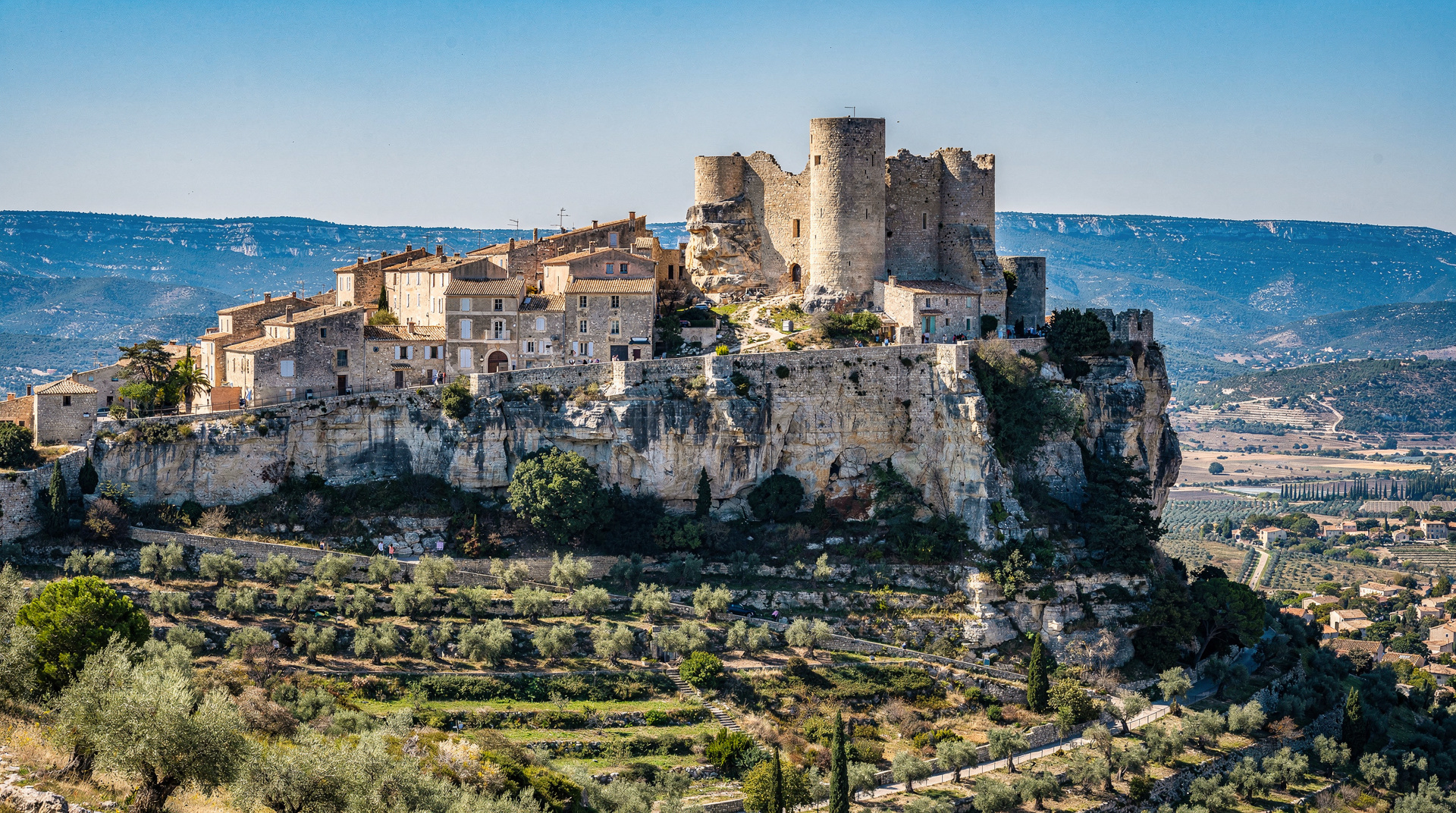
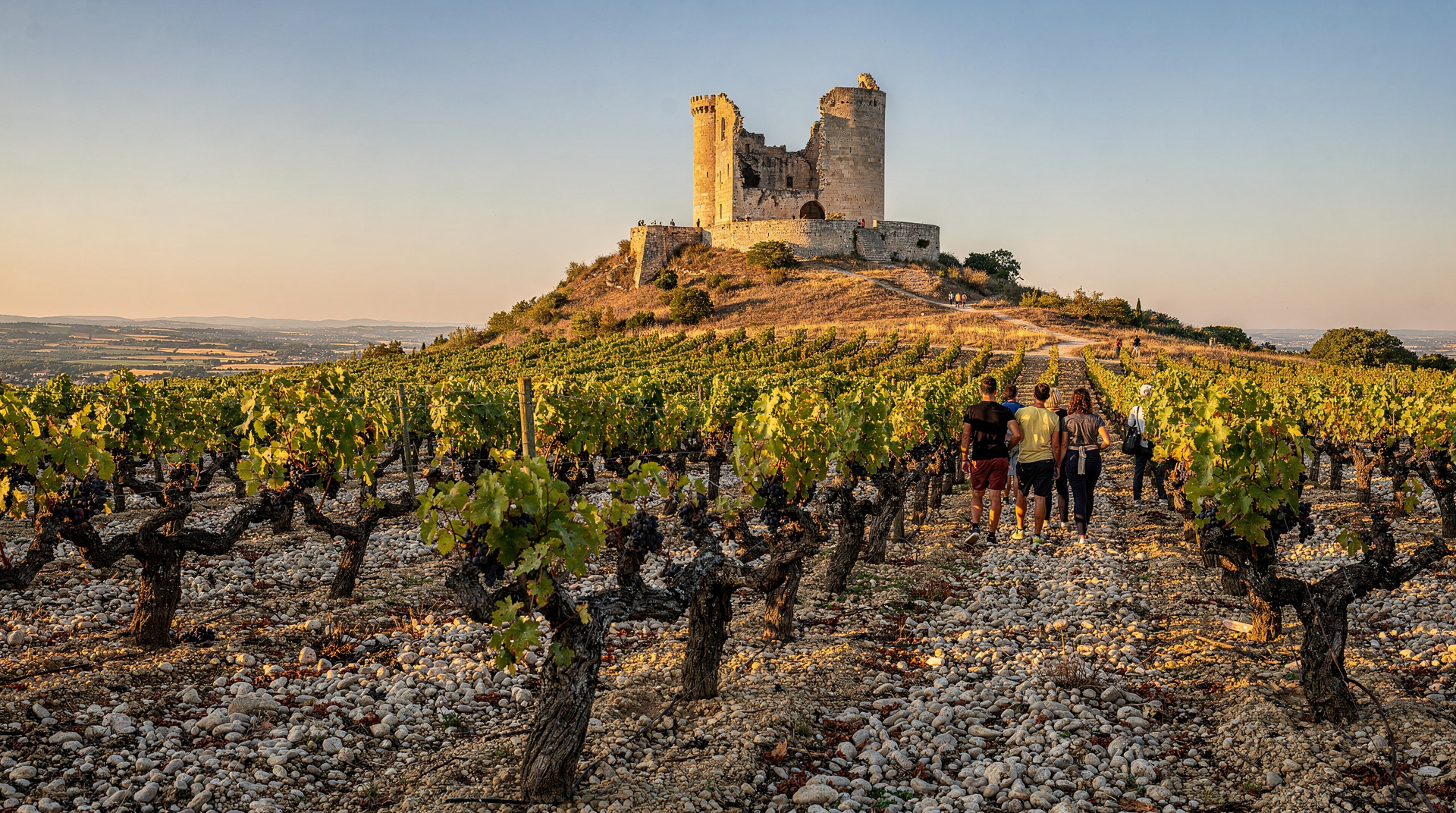
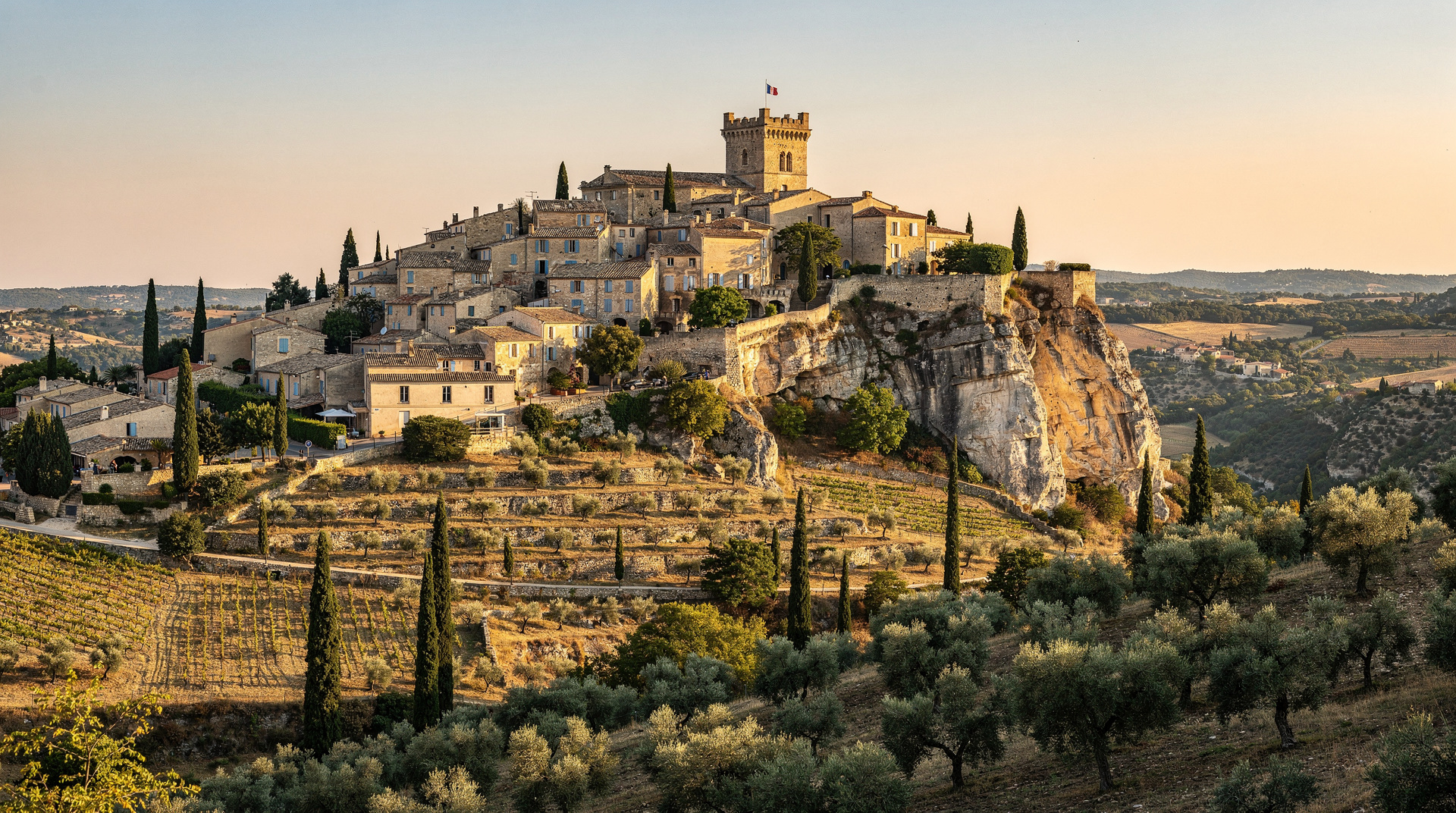
Les Baux sits on a limestone spur 245 metres above the Alpilles plain, the ridge falling away in sheer cliffs on three sides. The ruined medieval citadel at the summit (Château des Baux) is one of the most impressively sited fortifications in France — walls built to the very edge of the drop, towers standing at the ridge crest.
What remains: The citadel ruins are accessible (entry approximately EUR 10 adult, combined ticket options available), and the views are extraordinary — the flat Crau plain to the south, the Camargue marshes in the distance to the west, the Alpilles ridge running east. The castle includes a small catapult reconstruction and interactive medieval siege-machine demonstrations (popular with children).
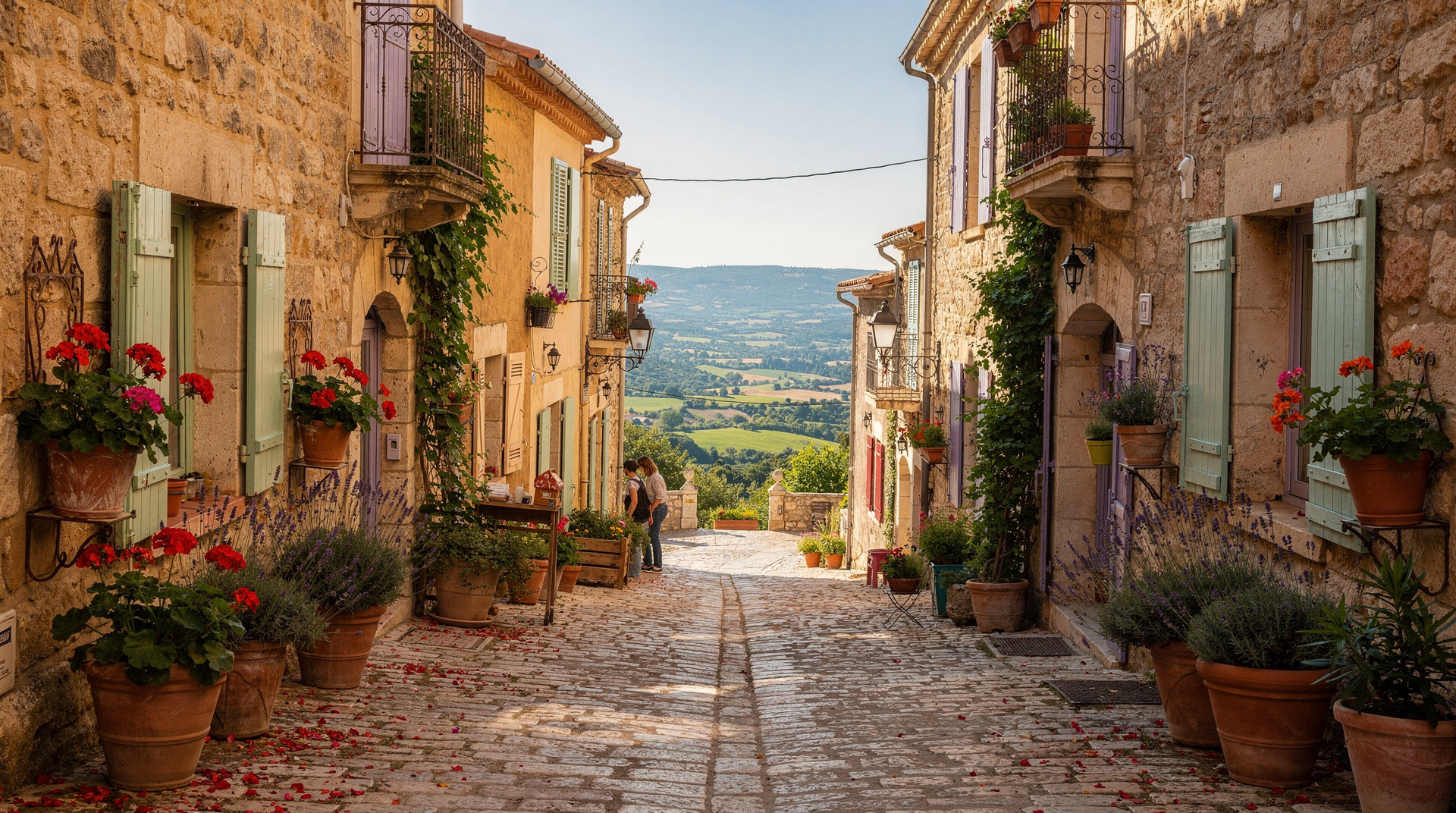
The village below: The village of Les Baux runs along the ridge between the car park and the citadel — a single main street of boutiques, restaurants, and galleries housed in Renaissance-era stone buildings. It is heavily tourist-oriented in season, but the architecture is genuinely beautiful. The 12th-century church and the carved rock-face tombs are worth noting.
Timing: Les Baux is extremely crowded in summer (July-August). Arrive at opening (9:00) or in the late afternoon (16:00+) to avoid the worst of the coach tour groups.
Carrières des Lumières (the priority booking)
The Carrières des Lumières is a disused quarry 500 metres from the village, whose vast stone chambers have been converted into an immersive audiovisual art installation. The 2026 show is Picasso: l’art en mouvement (40 minutes) paired with a shorter programme on Frida Kahlo: en plein cœur (14 minutes), running from 13 February 2026 through January 2027.
Over 450 projected images of Picasso’s works — paintings, ceramics, drawings, photographs — are projected simultaneously onto the quarry walls, ceiling, and floor at monumental scale, with a musical score. The effect of standing in a 14-metre-high stone chamber surrounded by 70 years of Cubism is genuinely extraordinary.
Practical (2026):
- Entry: EUR 16.50 adult, EUR 12.50 children (7-17)
- Hours: April-June and September-October 9:30-19:00; July-August 9:00-19:30; November-March 10:00-18:00
- Duration: about 1 hour for both programmes
- Temperature inside: approximately 14-15°C year-round — bring a layer regardless of outdoor heat
- Book online at carrieres-lumieres.com, especially for July-August when queues can be long
This is among the most remarkable visitor experiences in Provence. Do not skip it.
Saint-Rémy-de-Provence
The town itself
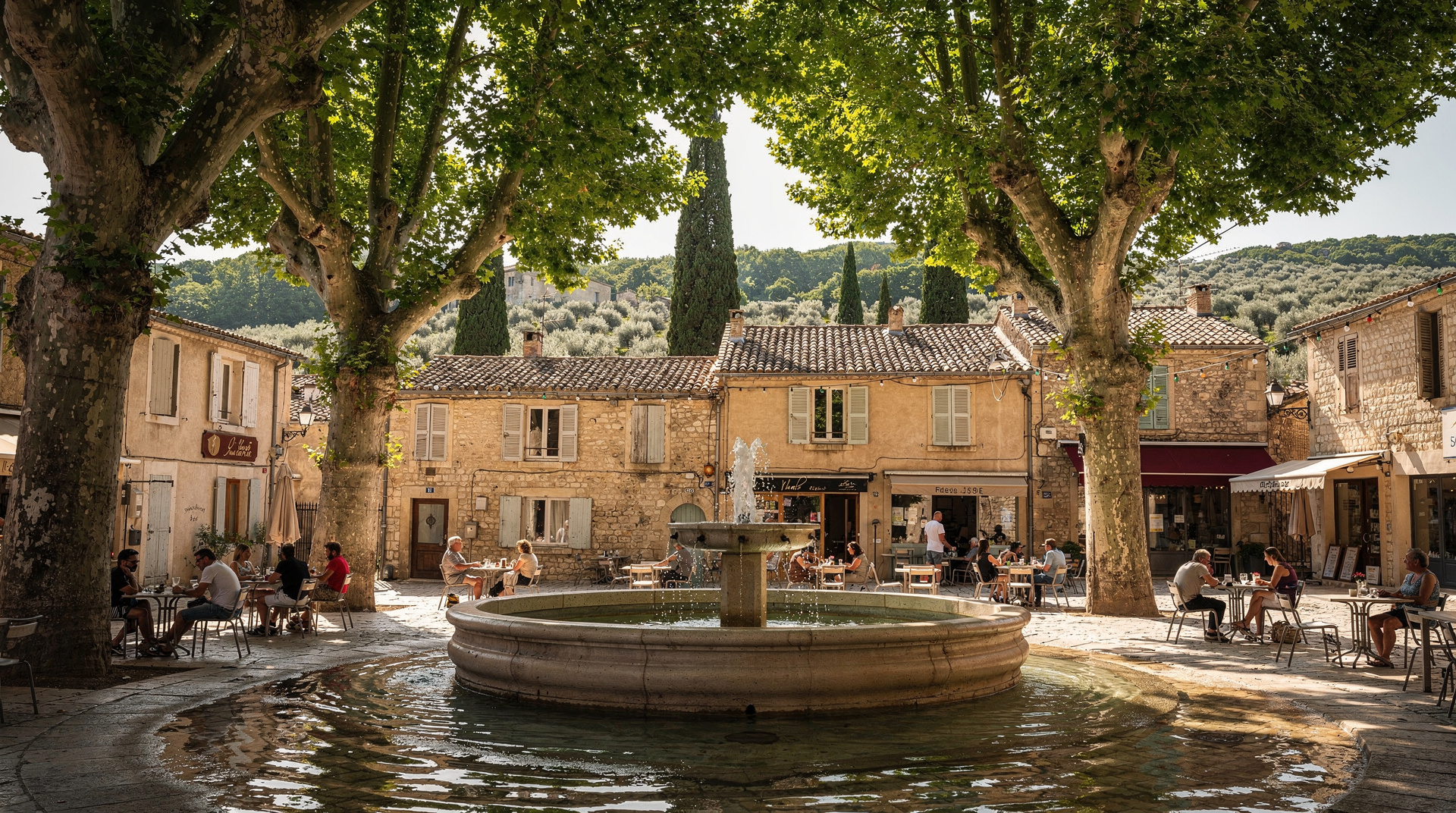
Saint-Rémy is a market town with a genuine year-round life — more lived-in than Les Baux, with a Wednesday morning market (Place de la République), plane-tree-lined boulevards, and the kind of café square that earns the name. The old town is a compact ring of streets around the former ramparts, now tree-shaded allées.
What to do in town: The pedestrian centre (Rue Carnot, Rue de la Commune) has good food shops, an excellent daily market, and shaded cafés. The Wednesday market is the best reason to time your visit — local farmers and producers spread along the boulevards from 7:00 to 13:00.
Provençal specialties: Saint-Rémy is one of the main centres of the Alpilles olive oil appellation (Huile d’Olive de la Vallée des Baux-de-Provence AOC) — some of the finest olive oil in France. Several mills and producers sell directly from the town and surrounding countryside. Look for the “AOC Vallée des Baux” label.
Glanum: the Roman and Greek site
Two kilometres south of Saint-Rémy on the D5 is Glanum — an archaeological site containing Greek, Hellenistic, and Roman ruins spanning from the third century BC to the third century AD. The main visible monuments are the Mausoleum of the Julii (a funerary monument in extraordinary condition, 18 metres tall) and the Arch of Glanum (a triumphal arch from the first century BC) — together known as “Les Antiques” and visible from the road.
The excavated city behind the monuments includes temples, forum, baths, and residential areas. Entry to the main Glanum site (not Les Antiques, which are roadside and always visible) is approximately EUR 7 adult.
Saint-Paul-de-Mausole: where Van Gogh painted
Directly across the road from Glanum is the Saint-Paul-de-Mausole clinic — a psychiatric facility that has operated continuously since the Middle Ages and where Vincent van Gogh voluntarily admitted himself in May 1889, remaining for just over a year. During this period he produced over 150 paintings, including the Starry Night (painted from his room window at night).
The former monastery church, the cloister (beautifully preserved Romanesque), and a replica of Van Gogh’s room can be visited. A garden around the building contains reproductions of paintings created on site. The facility is still a functioning psychiatric clinic; only the historical sections are accessible.
Entry: Approximately EUR 5 adult. Open daily (check saint-paul-de-mausole.fr for current hours).
Where to eat
In Les Baux: The village restaurants mostly cater to coach tour groups at corresponding prices. For a better lunch, drive the 3 km to Fontvieille (a small town south of Les Baux) where ordinary-priced Provençal restaurants serve locals and fewer tourists.
In Saint-Rémy: Much better options. The Wednesday market food stalls are the cheapest lunch in the area — socca, sandwiches, cheese and charcuterie. The cafés on Cours Mirabeau (named after Aix’s famous boulevard, a coincidence) serve proper set menus for EUR 16-22.
A practical timed day plan
07:30 — Leave Marseille (A7 north, D17 east).
08:50 — Arrive Les Baux (car park open from 8:30 in summer). Walk to the Carrières des Lumières for the 9:00-9:30 opening. Picasso and Frida Kahlo show (1 hour).
10:30 — Walk up to the Les Baux citadel. Explore the ruins and views (1 hour).
12:00 — Drive 10 km east to Saint-Rémy (25 minutes).
12:30-14:00 — Lunch in Saint-Rémy centre (market if Wednesday).
14:00-15:30 — Visit Les Antiques and Glanum.
15:30-16:30 — Saint-Paul-de-Mausole cloister and Van Gogh garden.
16:30-17:30 — Saint-Rémy old town wander, olive oil shop, café.
18:00 — Drive back to Marseille (arrive ~19:15-19:30).
Where this day fits in a longer stay
If you have more than a couple of days, this trip combines well with other outings. The Marseille and Provence 5-day itinerary places Alpilles villages alongside the coast, and our Van Gogh in Arles guide is a natural companion to the Saint-Paul-de-Mausole visit, since the painter’s Arles and Saint-Rémy periods follow one another. For a wider view of what else is reachable from the city, browse the Provence wine routes if you would rather taste than walk.
Adding Arles or Avignon
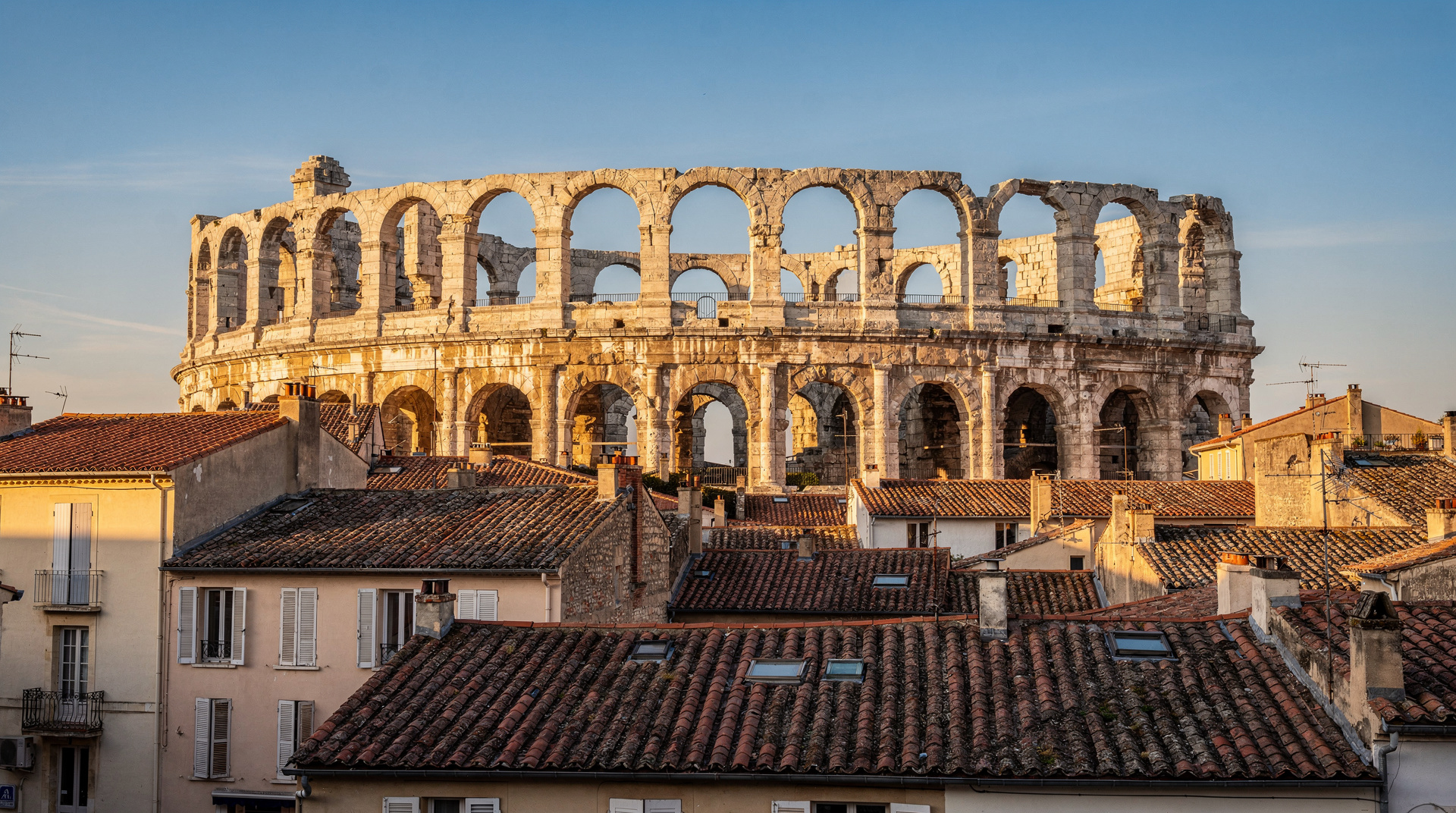
Les Baux and Saint-Rémy sit midway between Arles (30 min southwest) and Avignon (30 min north). Either can be added to this day if you are willing to start earlier and accept a long driving day. The classic guided tour from Marseille typically covers Arles, Les Baux, and Saint-Rémy together — this is the most popular single-day circuit in the area. See our Arles day trip guide and Avignon day trip guide for what each adds.
Pairing with the Luberon instead
Some visitors prefer to skip Arles or Avignon and continue east into the Luberon instead — Bonnieux and Lourmarin are roughly 40-50 minutes from Saint-Rémy on quiet D-roads through the Alpilles. This makes for a very long day (10+ hours with driving), but it links two of Provence’s best regions without backtracking to Marseille first. See our Luberon villages day trip guide for the villages themselves and their parking realities, which are just as important to plan around as the Les Baux and Saint-Rémy timings above.
Why a car beats the guided tour here (mostly)
A guided tour solves the driving and parking, but it fixes your Carrières des Lumières slot and your lunch window, and it typically allocates less time at Glanum and Saint-Paul-de-Mausole than a self-driven day allows. If seeing the Picasso show at your own pace matters, or you want to linger at the Wednesday market in Saint-Rémy, a rental car or your own vehicle is the better choice. If you would rather not navigate the Alpilles’ minor roads and parking logistics, the guided option removes that stress entirely — see the day trips from Marseille overview for how this pairing compares with other single-day options from the city.
Frequently asked questions about Les Baux-de-Provence and Saint-Rémy day trip from Marseille
Can you do Les Baux and Saint-Rémy without a car? Not independently — there is no train and no reliable direct bus service linking Marseille to either village. A guided day tour from Marseille (several operators run the Arles-Les Baux-Saint-Rémy circuit) is the only realistic car-free option.
Is one day enough for both villages? Yes, comfortably, if you follow a structured plan like the timed itinerary above — around 7-8 hours covers the citadel, the Carrières des Lumières, Glanum, and Saint-Paul-de-Mausole with time for lunch. Trying to add Arles or Avignon on the same day makes it a long, driving-heavy day rather than a relaxed one.
Top experiences
Bookable activities with verified prices and instant confirmation on GetYourGuide.