Why Provence needs more than a day — an anti-day-trip-overload essay
From Marseille: Cassis and Aix-en-Provence full-day tour
Duration: 8 hours
At a glance
| Where | Provence beyond Marseille — Luberon, Camargue, Arles, Avignon, Aix |
| Cost | Day trip: transport only, often under EUR 30 by train. Overnight: add around EUR 70–200 per room per night depending on town and comfort level |
| Time needed | 1 day minimum for a single destination; 2–3 days minimum to feel the difference an overnight stay makes |
| Getting there | TGV/TER from Marseille Saint-Charles to Avignon and Arles; car recommended for the Luberon and Camargue interior |
| Best time | Early morning or the two hours before sunset, any season — this is the whole argument of the piece |
Day trip vs overnight — what changes
| Day trip | One overnight stay | |
|---|---|---|
| Golden hour access | Missed (arrive ~10:00, leave ~17:00) | Both morning and evening light available |
| Crowd levels | Peak tourist hours only | Empty streets before 9am and after 6pm |
| Cost | Lower (transport only) | Higher (add one hotel night, EUR 70–200+) |
| Depth of place | Surface — main sights, market, lunch | Underneath the surface — see “second day in Aix” below |
| Best suited to | Cassis, Aix (short hop, well-connected) | Arles/Camargue combination, Luberon villages |
The day trip economy and its costs
The Provence day trip is a well-developed tourism format. From Marseille, you can day-trip to: Cassis (35 minutes), Aix-en-Provence (40 minutes), Arles (1 hour), Avignon (1 hour by TGV), the Luberon (1 hour 15 by car), the Camargue (1 hour 30 by car), the Gorges du Verdon (2 hours by car). The guidebooks cover all of these. The organised tour operators run coaches to most of them daily. Airbnb hosts have notebooks explaining how to do it efficiently.
This is genuinely useful. Day trips work for people with limited time, and the connections from Marseille to most of these destinations are good enough that a day trip produces a coherent experience. We recommend several of them ourselves. Our day trips guide covers the timing and verdict honestly.
But over years of visiting Provence, we have developed a clear sense of what the day trip format costs — specifically, what it reliably fails to capture — and the argument for slowing down has become harder to ignore.
What you miss in a day
The most obvious cost is the golden hour. Every major Provence destination — the Luberon villages, the lavender plateau, the Pont du Gard, the Calanques coastline, Arles — is significantly better in the two hours before sunset and the two hours before the main tourist traffic arrives in the morning. The day trip, which typically arrives at 10:00 and departs at 17:00, reliably misses both.
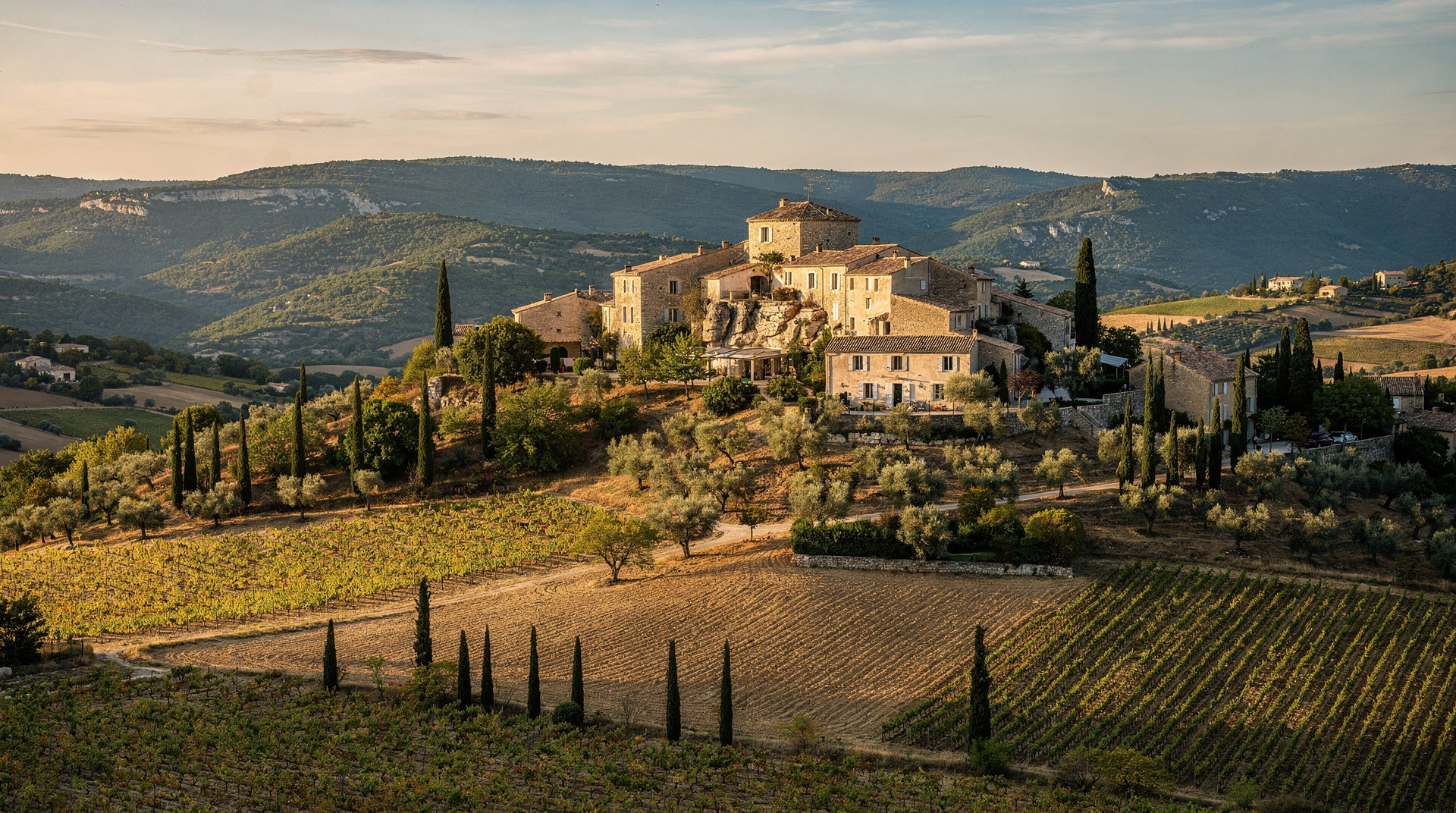
Gordes at 7:30 on a September morning, with the mist in the valley and the village catching the first light — this is the Gordes that photographs and painting and a whole visual tradition has been working to capture. Gordes at 11:00 in July, with the car parks full and the ice cream queues visible from the village square, is a different and lesser version of the same place.
The Luberon villages generally — Gordes, Roussillon, Bonnieux, Ménerbes, Lacoste — have a specific quality at off-hours and in the shoulder seasons that is categorically different from their tourist-hour appearance. The ochre facades of Roussillon in the morning light, before the tourist buses arrive, produce a colour that the afternoon photographs do not. Not because the ochre is different. Because the light is.
The second day in Aix
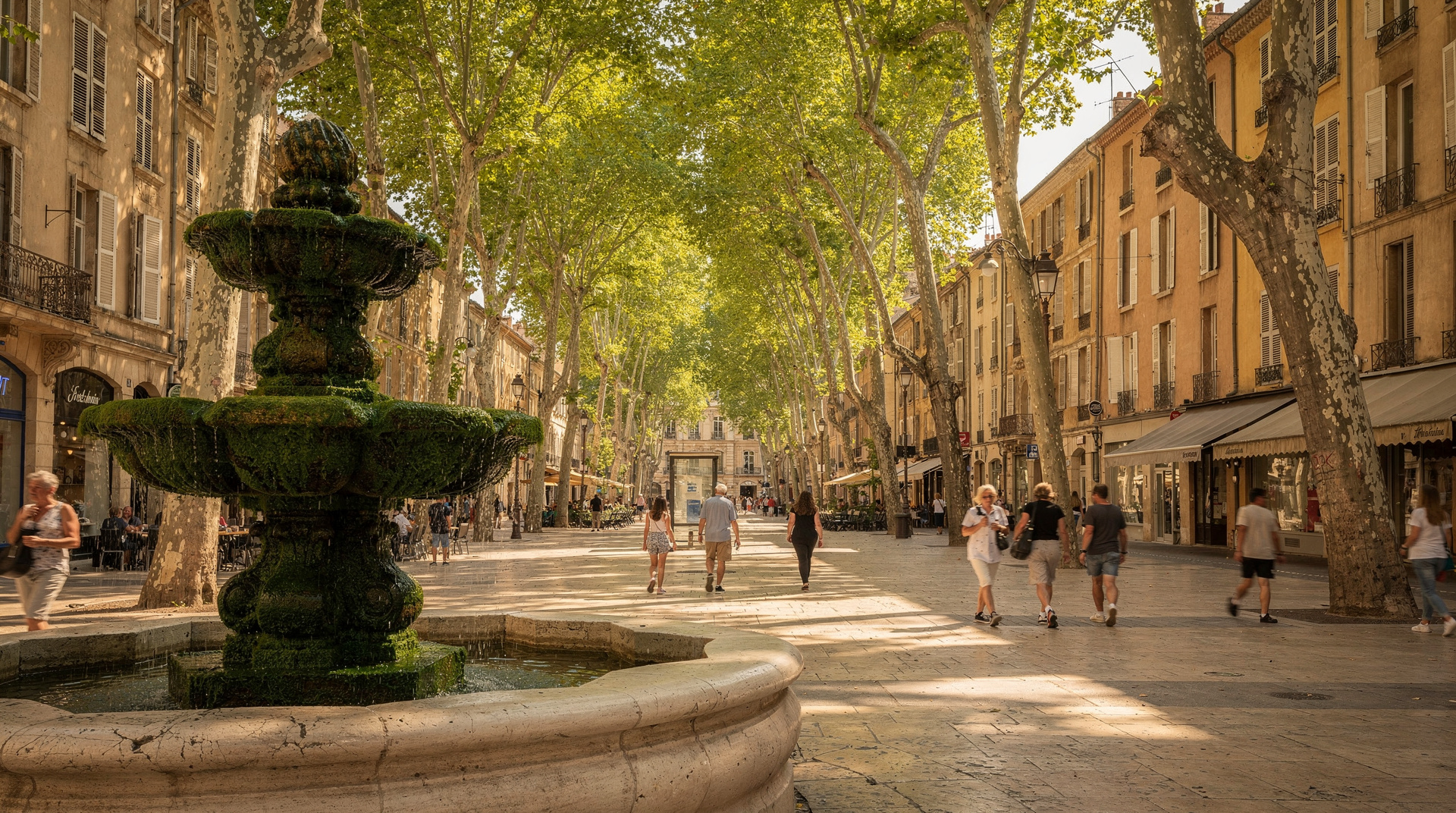
Aix-en-Provence is an excellent day trip from Marseille. We say this in the weekend in Aix piece. But a day in Aix produces the Cours Mirabeau, the Cézanne trail highlights, a market visit, and lunch. A second day in Aix produces the Musée Granet properly, the afternoon wine country toward Sainte-Victoire, an evening in the university quarter when the city is at its youngest and most alive, and the morning discovery of what the Cours Mirabeau looks like at 8:00 before the day starts.
The second day is the one that makes you understand the first day. The first day gets you to the surface. The second day begins to get you underneath it. This pattern holds across essentially every destination in the region.
The train-and-stay argument
The Marseille rail network makes overnight stays in Provence logistically straightforward. Avignon is one hour by TGV; Arles is one hour by TER; Cassis is 35 minutes. Return tickets are cheap. A night in any of these towns — even one night — shifts the experience from a tourist visit to something closer to temporary residence. You walk the streets after the tour groups have left. You have breakfast at the local café. You see the early morning market. You understand how the place functions when it is not performing for you.
The cost difference between a day trip and an overnight stay is primarily the hotel — which, in Provence, ranges from a modest EUR 70–90 per night for a basic but acceptable room in most of these towns to EUR 150–200+ for something with genuine comfort. The ROI, in terms of depth of experience, is high.
The Camargue argument
The Camargue makes this point most forcefully. A day trip to Saintes-Maries-de-la-Mer from Marseille involves 1 hour 30 minutes of driving each way, leaving perhaps 5 hours on the ground. Those 5 hours can produce a horseback ride (2 hours), a walk through the flamingo lagoon viewpoints (1 hour), and lunch. This is not nothing. But the Camargue’s specific quality — the marshland evening light, the dawn bird activity, the way the landscape changes between morning and afternoon and dusk — requires longer.
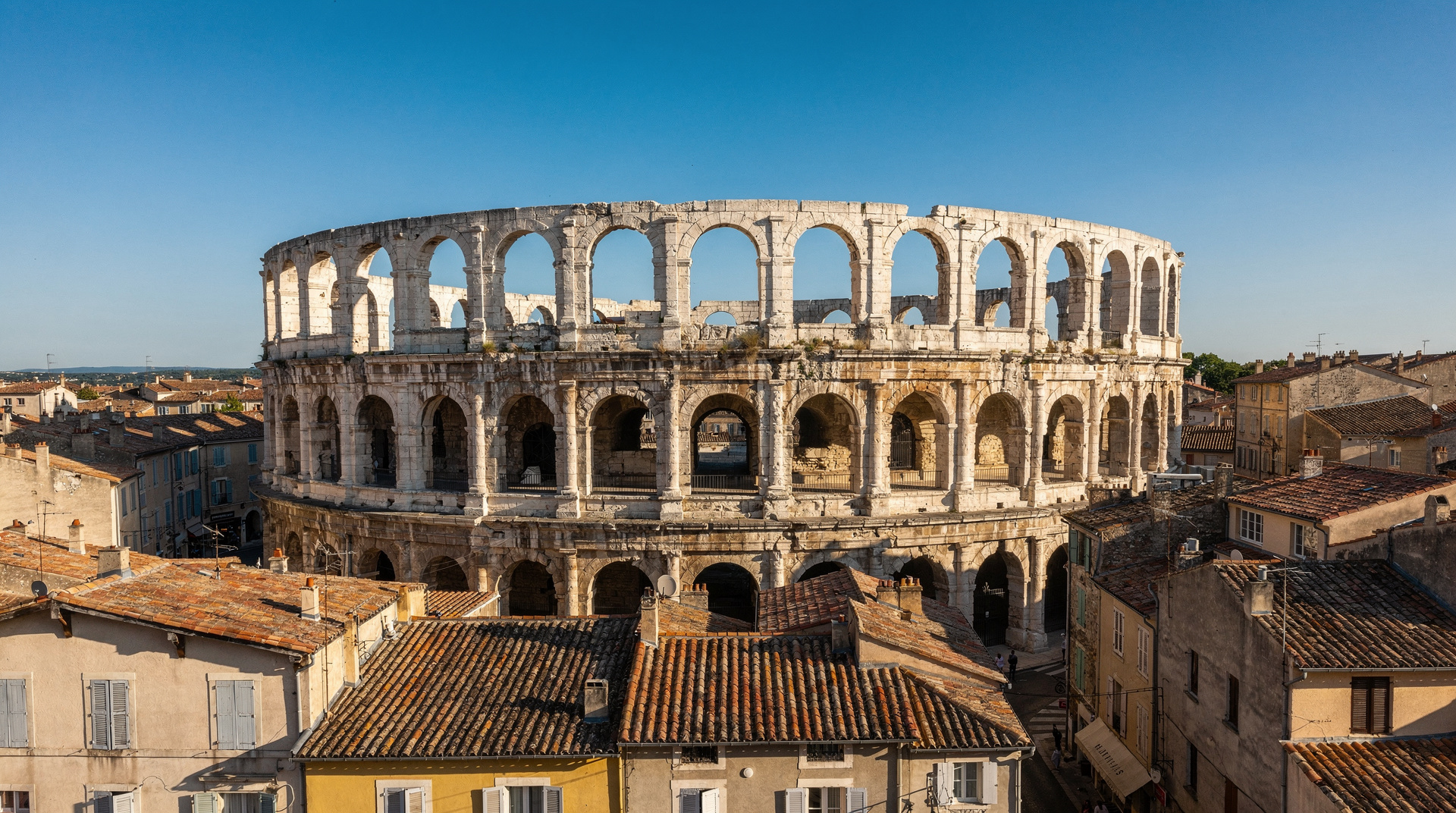
Two nights in Arles plus a full Camargue day is the structure that actually works. The first day is Arles (Roman monuments, the Van Gogh circuit, the Saturday market if the timing allows). The second is the Camargue. The third morning is the Sunday quiet of Arles before the drive or train back. Three days, two nights, two entirely different landscapes.
The argument about Provence specifically
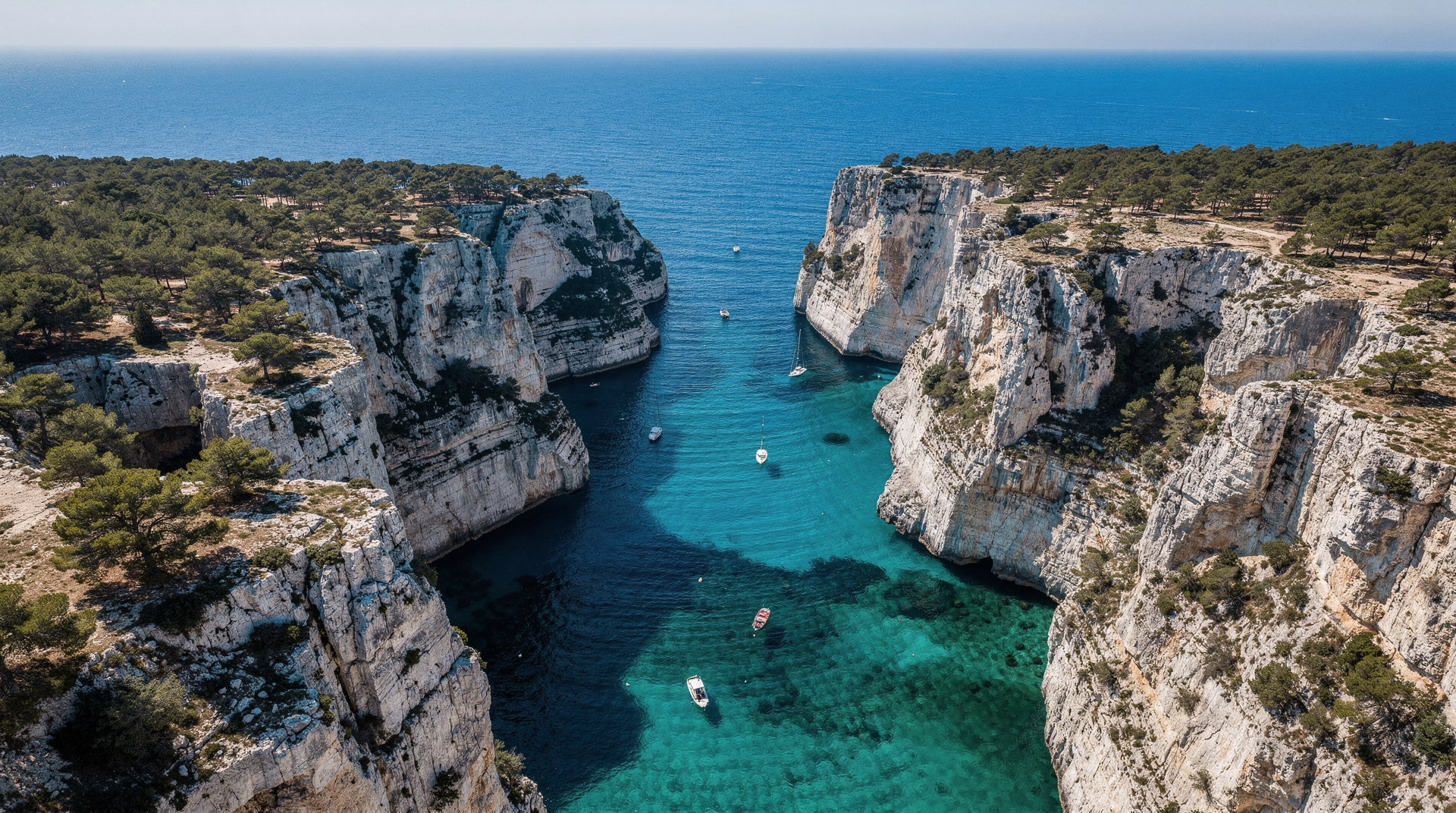
Provence is not a collection of single destinations. It is a landscape, and the connections between its parts are some of what makes it worth knowing. The route between the Luberon and the Alpilles, passing through the Durance valley, is itself part of Provence — not just the named villages on either end. The drive between Cassis and La Ciotat along the coastal road, stopping at a belvedere above the Cap Canaille, is part of the Calanques coast that no day trip from Marseille captures because no day trip starts in Cassis.
The itinerary thinking — Marseille plus Provence in a certain number of days — produces a version of the region that is geographically coherent. Most people arrive in Marseille and treat it as the base. This works. But it means the Luberon, the Verdon, the Camargue, and the Rhône river towns are always at a distance, always requiring a long day, always rushed. The alternative — Marseille for two days, then moving to a second base in the interior or the coast — produces a different Provence entirely.
What slowing down actually requires
It requires, primarily, more time. Which is the honest and unsatisfying answer. People who are in Marseille for three days cannot restructure their trip to include an overnight in Gordes and two nights in Arles. This is real.
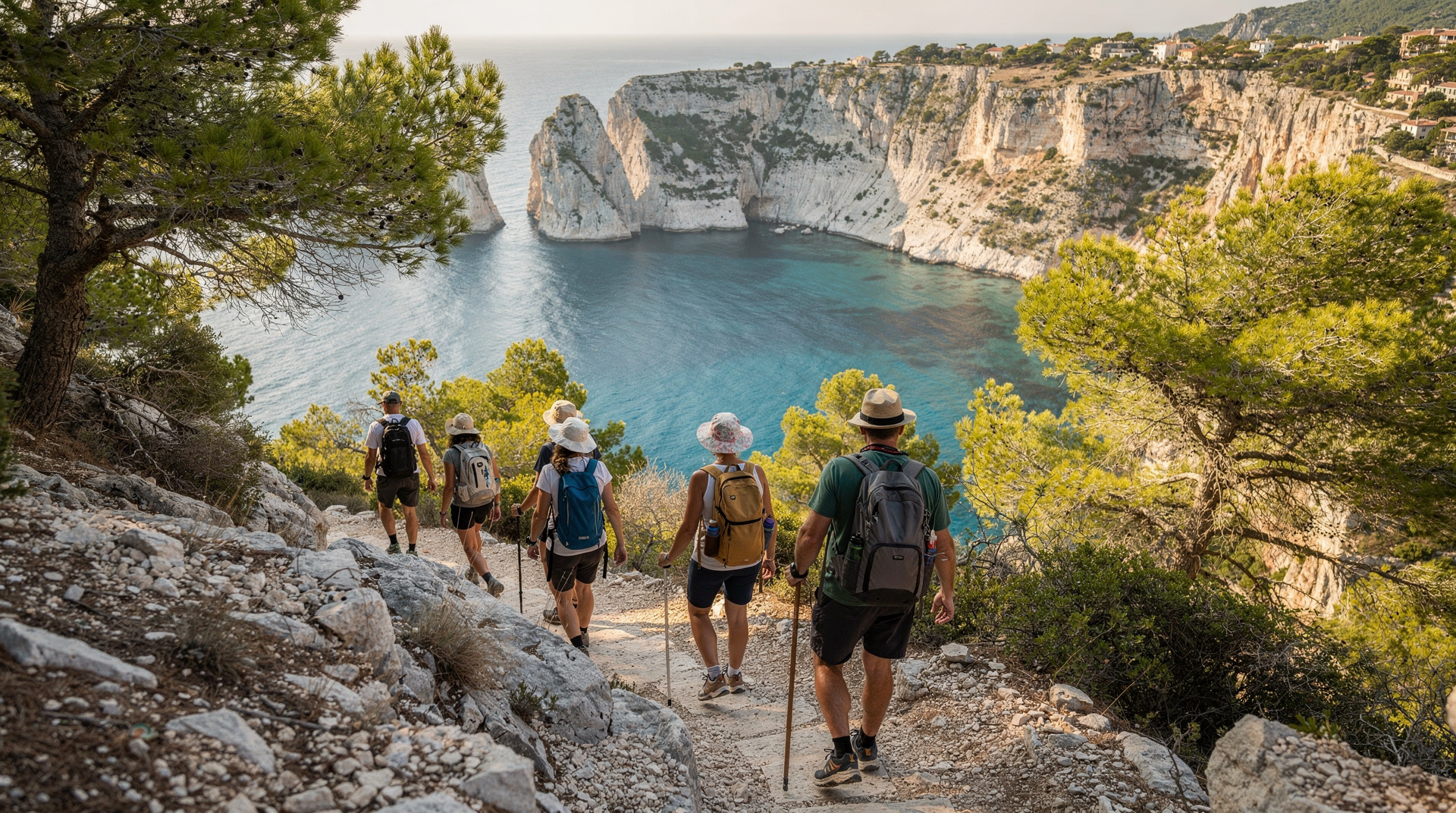
But people who are planning a first substantial visit to the Marseille and Provence area and have flexibility in their schedule should consider seriously what more time buys. The region’s quality is not evenly distributed across the hours of a standard day trip. The best of it — the light, the quiet, the version of a place that is not already formatted for your visit — is available at hours and in seasons that the day trip format does not reach.
Our day trips guide covers all the destinations mentioned above with honest timing and verdicts. The Cassis day guide shows what a good day trip looks like when the destination justifies the format. The honest answer to “how long do I need?” — for the full Marseille and Provence experience — is two weeks, minimum. Most people have a week. That is workable. It is not enough, but it is workable.
Building a slower itinerary
If you have five to seven days and want to test this argument yourself, a workable structure is: two nights in Marseille (city, Calanques, Le Panier), one night in Aix (see the weekend in Aix piece for the full case), and two nights split between Arles and the Camargue. This leaves the Luberon and the Verdon for a future trip rather than squeezing them in as rushed half-days. Our best time to visit guide is worth checking before you lock the dates, since shoulder-season light is a large part of what this piece is arguing for.
Start with Marseille and let the region grow from there.
Top experiences
Bookable activities with verified prices and instant confirmation on GetYourGuide.