A perfect day in Cassis — hour by hour
Cassis: 3 Calanques half-day hiking tour with swimming
Why Cassis earns a full day
Cassis is 35 minutes by TER train from Marseille, which is close enough to be treated as a half-day. This is a mistake. The village, the wine, the Calanques access from the east, and the specific quality of a June evening at the port justify the full day without any pressure to rush. We have done Cassis as a two-hour detour and as a two-night stay. The full day is the format that resolves well.
| At a glance | |
|---|---|
| Where | Cassis, around 35–40 minutes by TER train or A52 drive from Marseille |
| Cost | Around EUR 30–50 per person for lunch with wine, plus train/parking and any wine tasting or kayak add-on |
| Time needed | A full day, roughly 8:30 to 20:00 |
| Getting there | TER from Gare Saint-Charles (around EUR 5–7 one way) or A52 by car |
| Best time | Late spring through early autumn for swimming; June and September avoid the worst summer crowds |
Day at a glance
| Time | Activity |
|---|---|
| 8:30 | Arrival, coffee at the port |
| 9:30 | Cap Canaille viewpoint |
| 10:30 | Calanques (Port-Miou, Port-Pin, or En-Vau) |
| 12:30 | Lunch at the port |
| 14:30 | Kayak/caves or second swim |
| 15:30 | AOC wine domaine visit |
| 17:30 | Walk through the old village |
| 18:30 | Aperitif at the port |
| 20:00 | Train or drive back |
8:30 — Arrive early
The train from Marseille Saint-Charles runs regularly; the earliest practical departure gets you to Cassis station around 8:30. The station is 3 km from the village — a local bus connects them in summer (check timetables, it does not always run early), or a taxi for around EUR 10. If you are driving, leave early: the car parks in town fill by 9:30 in summer, and the shuttle from the main car park (Parking de la Grande Mer) is the correct solution.
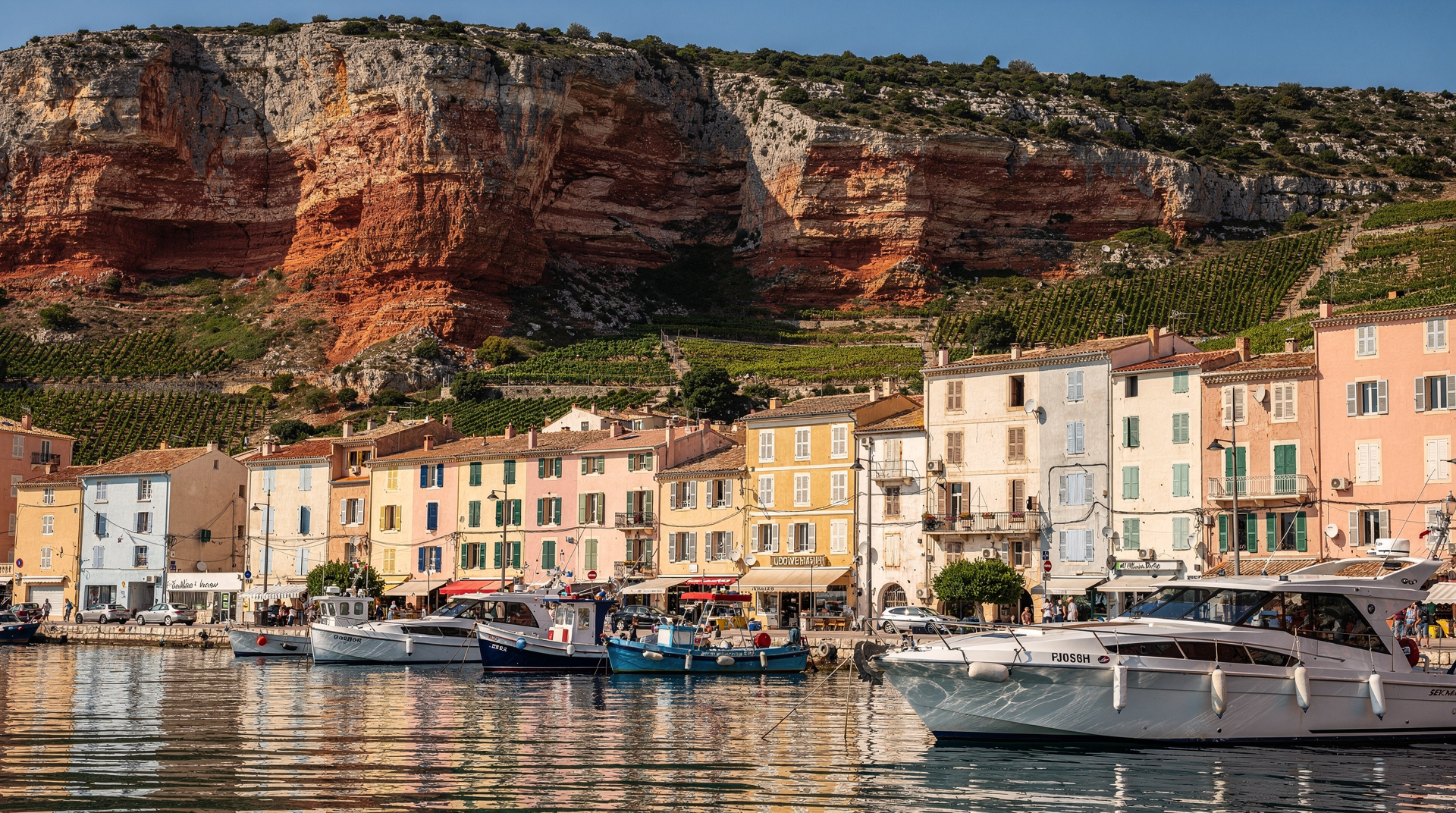
Arriving at 8:30 means you get Cassis before the day trippers. The port is still quiet, the boulangeries are just opening, and the light on the Cap Canaille — the highest coastal cliff in France, rising to 394 metres — is at its best. Walk along the quai, find coffee and a croissant, and watch the port wake up.
9:30 — Cap Canaille viewpoint
If you have transport (or are willing to pay for a taxi), the drive up to the Route des Crêtes along the top of the Cap Canaille is the most dramatic piece of coastal road in Provence. The views west toward Marseille and east toward La Ciotat are vertiginous. On a clear June morning, the Calanques spread out below you in both directions like a fold-out map of everything the coast is.
This is a twenty-minute diversion maximum. The route is one-way in summer (check direction before you go — the direction of travel alternates). Return to Cassis by 10:30.
10:30 — Calanques from the Cassis end
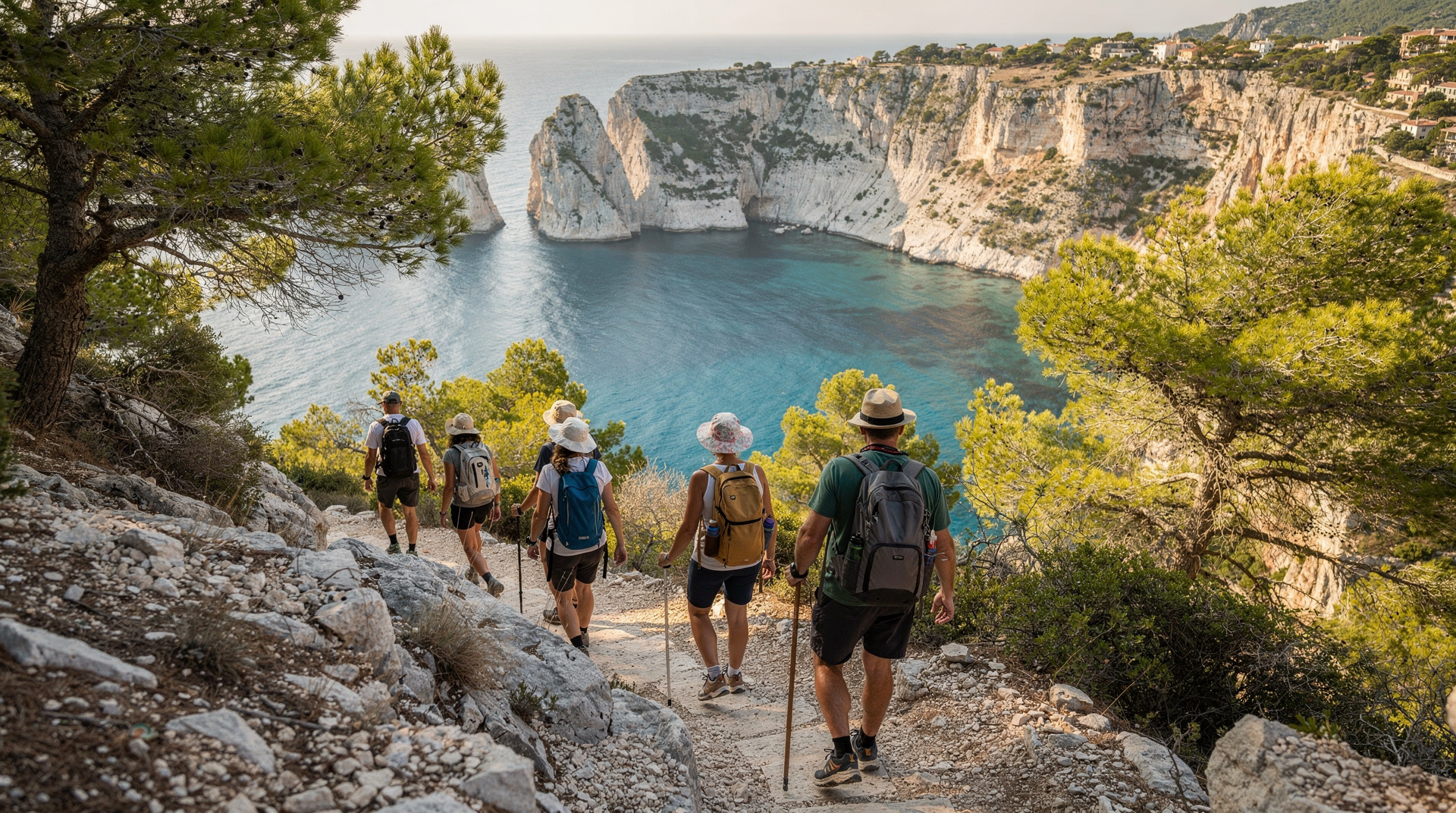
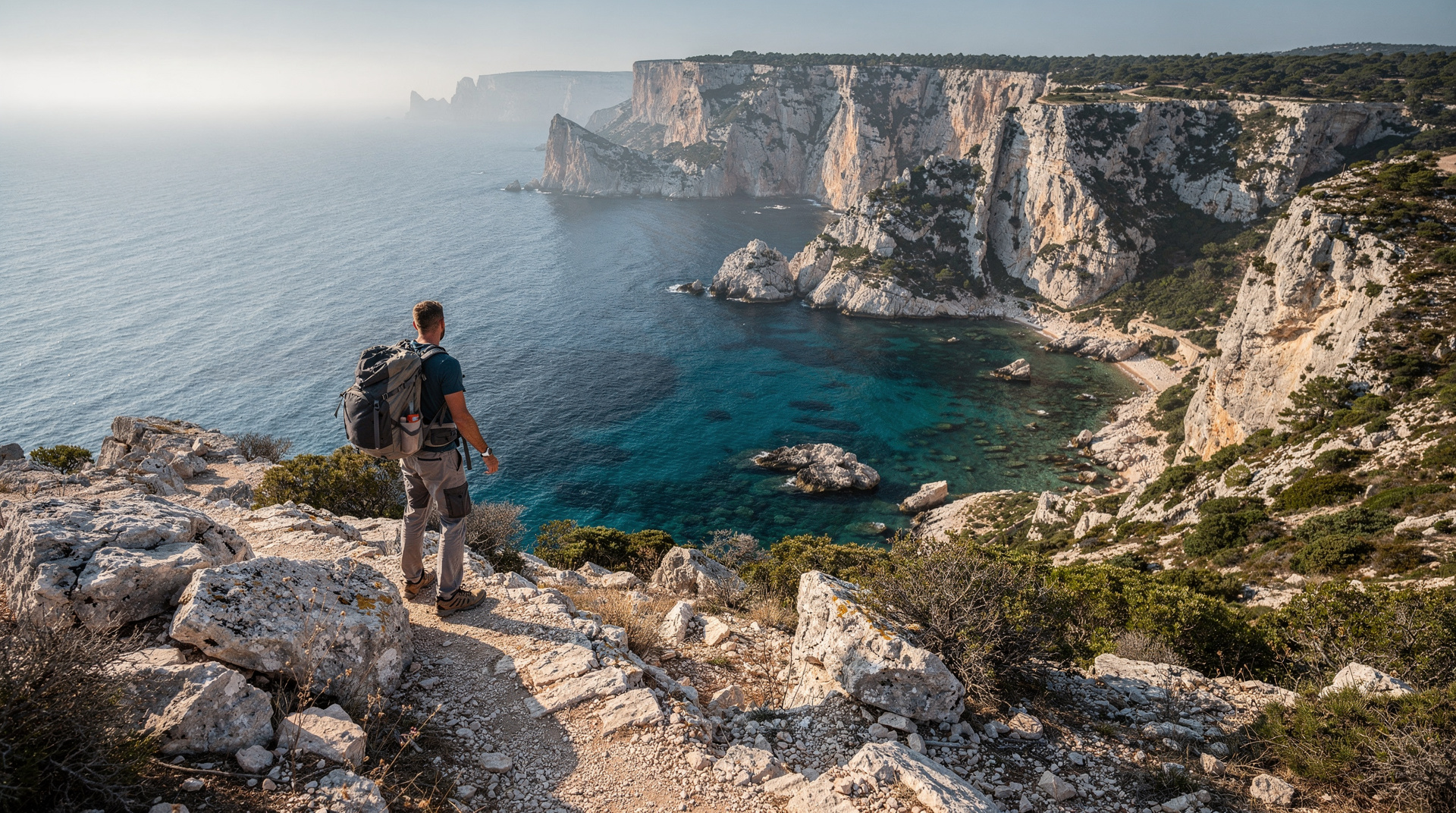
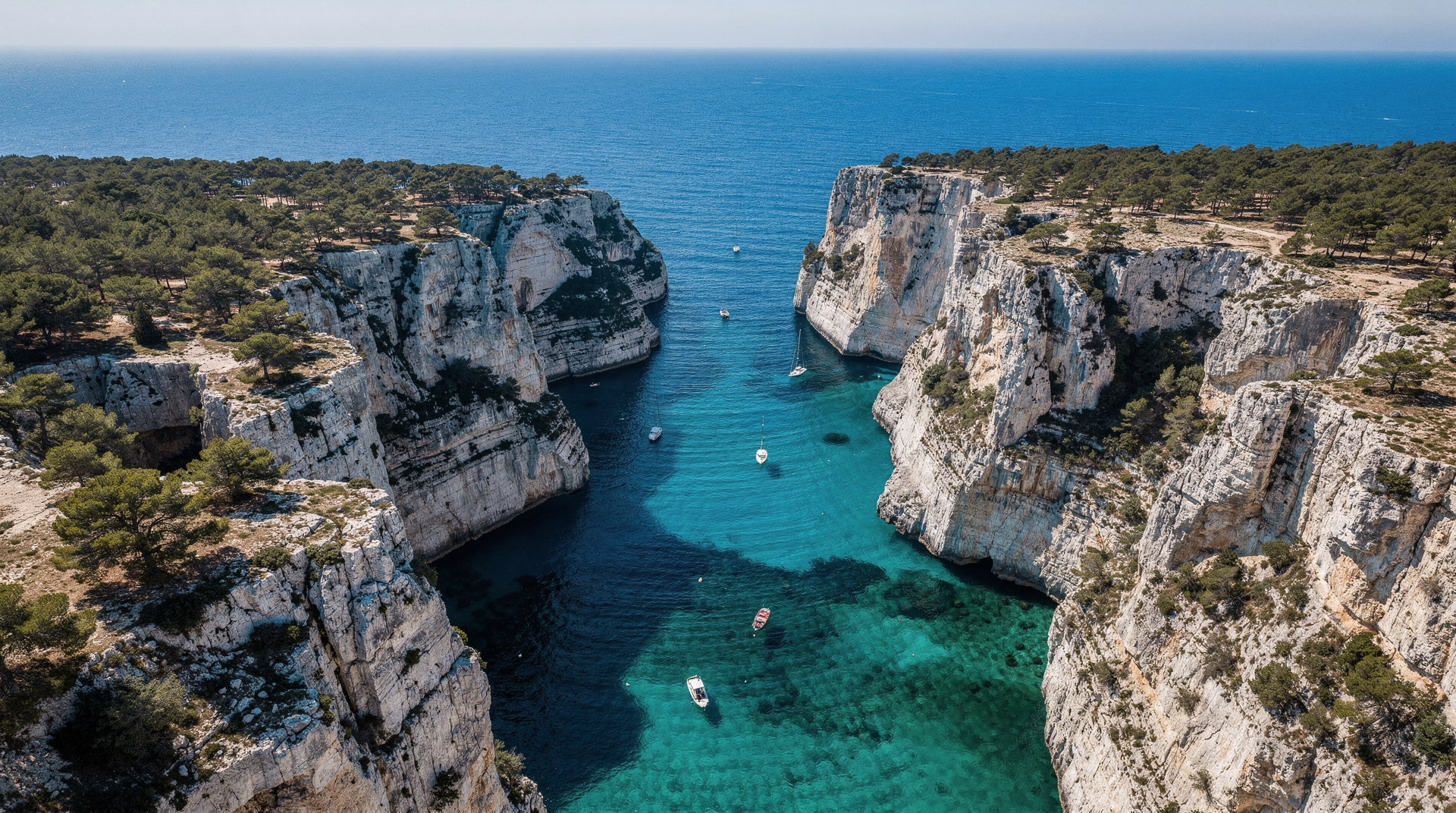
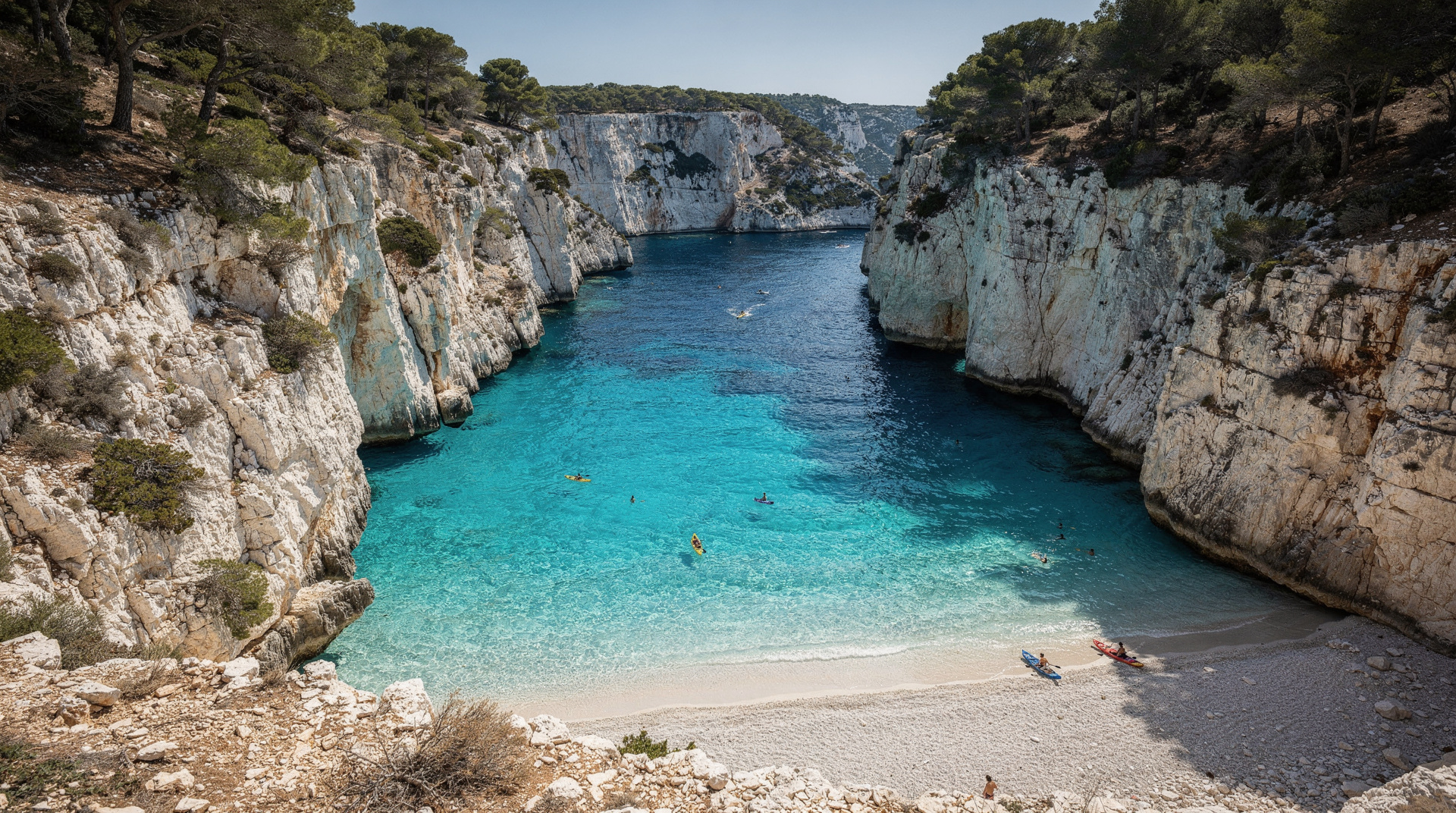
The three calanques most easily reached from Cassis are Port-Miou, Port-Pin, and En-Vau. Port-Miou is accessible in 15 minutes by foot from the town centre (follow the signs from the port). Port-Pin is another 25–30 minutes beyond that. En-Vau — the most spectacular — is another 45 minutes beyond Port-Pin, and involves a steep rocky descent that requires proper footwear.
A half-day strategy: Port-Miou and Port-Pin for a swim, return by 12:30 for lunch. En-Vau requires committing the full morning and sacrificing the swim in favour of the scenery, unless you start at 9:00 and move fast.
In summer, boats from the Cassis port run calanque tours — these reach the mouth of En-Vau, where the water is clear enough to swim from the boat. This is the softer option and not shameful.
12:30 — Lunch at the port
Cassis has a genuine restaurant scene around its port. We are not going to name specific restaurants because they change and we would rather you trust your eyes: look for tables set back from the street, handwritten menus, a patron who looks like they actually own the place. The fish is the thing — Cassis is an active fishing port and the catch arrives directly from the boats. Calanques-caught sea bass, rouget (red mullet), and sea bream are the regulars.
Budget EUR 30–50 per person for a proper port lunch with wine. Do not eat the fixed tourist menu with bouillabaisse at EUR 25 — see our bouillabaisse guide for why.
A rosé is obligatory. Cassis produces the only white wine in Provence covered by its own AOC (the Cassis AOC whites are excellent and underrated) but the rosé is what you are here for. Order a half-bottle if you plan to hike after lunch; the midday sun and wine are a difficult combination on rocky terrain.
14:30 — Visit the caves of the cliffs (optional)
The rocky shoreline east of Cassis toward La Ciotat has a series of sea caves and inlets accessible only by kayak or boat. Several operators in Cassis offer half-day kayak tours along this coast — a different perspective from the Calanques hiking, and one that puts you in the water rather than above it. This works well as an afternoon option after the morning hike, if you are happy being active all day.
Alternatively, this is the time for a second swim at the Plage du Bestouan (the closest beach to town, a 5-minute walk from the port) before the next item.
15:30 — The AOC Cassis wine domaines
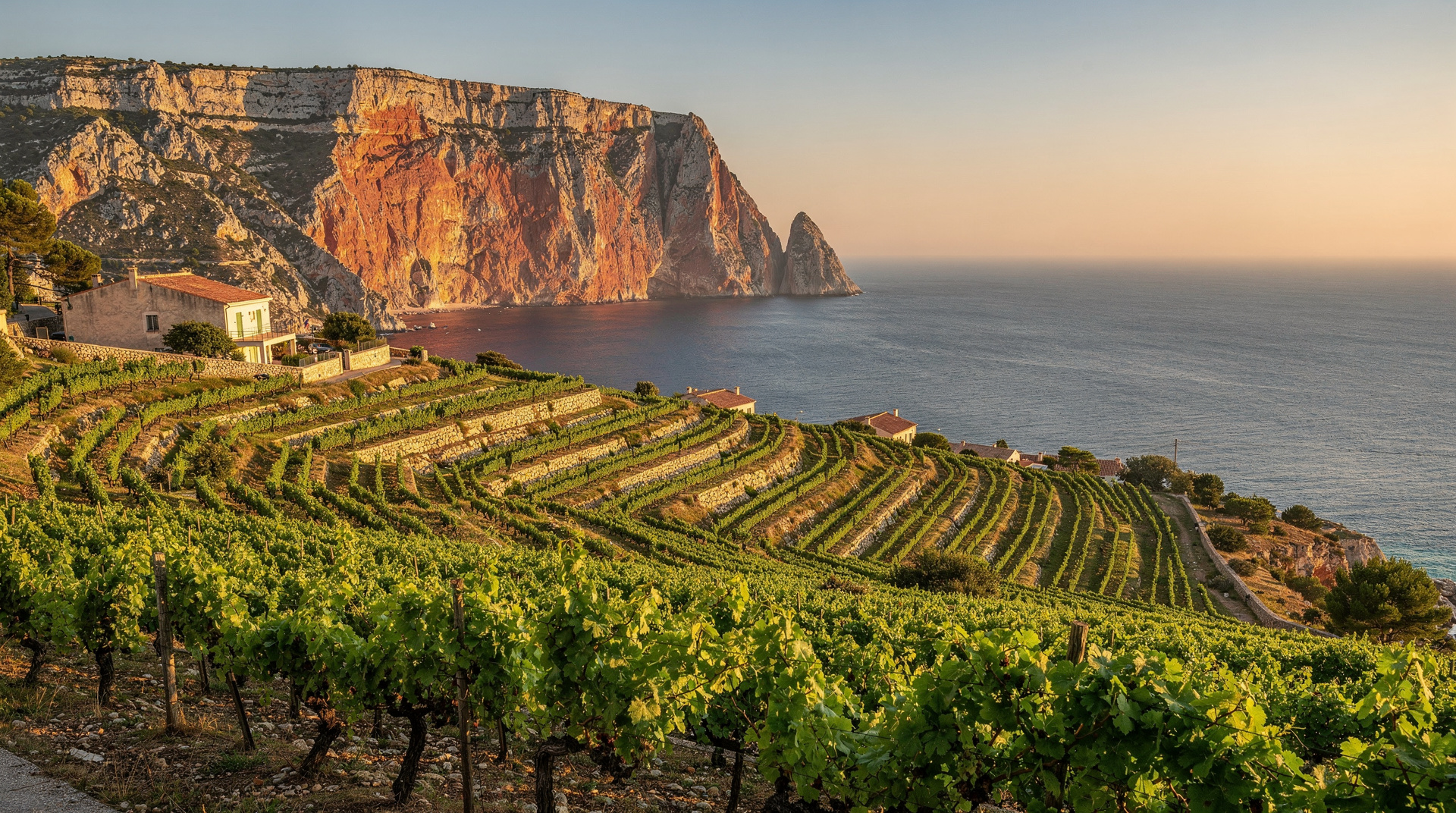
Cassis has only 215 hectares of vines — one of the smallest AOCs in France — and the vineyards sit directly above the village in the bowl formed by the Cap Canaille cliffs. Several domaines offer visits and tastings; some require reservations, some do not in low season. The Cassis white is predominantly Clairette, Marsanne, and Ugni Blanc — a crisp, mineral wine that is extremely good with seafood and almost never available outside the region. We have been told that 75 percent of production is drunk locally, which sounds like an exaggeration until you try to find it in a wine shop in Paris.
One of the more atmospheric options is an electric-buggy winery tour that visits AOC producers and includes tastings — a good choice if you want the context without navigating driving between domaines after a port lunch. Budget around an hour for a proper tasting.
17:30 — Walk back through town
Cassis has an old village behind the port that rewards slow walking: the lanes behind the main square, the lavender and rosemary spilling over the garden walls, the cabanons (fishing huts) at the water’s edge. This is the quiet hour before the evening crowds, and the light on the terracotta rooftops and pale stone is at its warmest.
18:30 — Aperitif at the port
A pastis or a glass of local white at a table on the port quai is the correct ending. The boats rock gently. The Cap Canaille turns gold. The ferry traffic on the distant horizon heads east toward the Calanques. We usually stay longer than planned.
20:00 — Train or drive back
The last trains back to Marseille run late enough that there is no reason to rush dinner in Cassis. If you are staying in Cassis for dinner (which we would recommend on a summer evening — book in advance), the train back is your last concern for several hours.
The logistics
Train: TER from Gare Saint-Charles, approximately EUR 5–7 one way, around 35–40 minutes. Check timetables on the SNCF website. The station is a few kilometres from the village — account for the bus or taxi.
Driving: A52 from Marseille, around 35 minutes without traffic. Do not drive in summer without booking the parking shuttle in advance. The town car parks fill before 10:00 on weekends in July and August.
Combining with Marseille: Cassis makes an excellent half-day from Marseille in the morning (train, swim, lunch, train back by 15:00) or a full day that replaces the city entirely. It also works as a night base for exploring both the Calanques from the east and making day trips back to Marseille.
For the full picture of what Cassis offers, see the Cassis destination guide. Our favourite calanque piece covers En-Vau specifically. The boat vs hiking comparison is useful if you are trying to decide which way to approach the calanques.
If you only have half a day
Not everyone can give Cassis a full day. The condensed version: take the 8:30 train, walk straight to Port-Miou and Port-Pin for a swim (skip En-Vau — it needs the full morning), have lunch at the port by 12:30, and catch a mid-afternoon train back. You lose the wine domaine visit and the Cap Canaille viewpoint, but you keep the two things that matter most: a calanque swim and a proper port lunch. See our Cassis day trip guide for a version built specifically around a shorter window.
Cassis vs. approaching the Calanques from Marseille
Cassis gives you Port-Miou, Port-Pin, and En-Vau with an easy walk-in and a real village at the end of the day. Approaching from the Marseille side (Luminy, Sormiou, Morgiou) gets you closer to the wilder, less-visited calanques but without a town to return to for lunch and wine. If your day is built around a swim and a relaxed evening, Cassis wins; if it is built around a serious hike with fewer people, the Sormiou-Morgiou approach from Marseille is worth comparing — see our Calanques from Luminy guide.
Frequently asked questions about perfect day in Cassis — hour by hour
Is Cassis worth a day trip from Marseille? Yes — the train is only 35–40 minutes, and Cassis offers calanque access, AOC wine tasting, and a proper port lunch in a single day, which is difficult to combine anywhere else this close to Marseille.
Can you swim in the calanques from Cassis without a long hike? Port-Miou is a 15-minute walk from the town centre and Port-Pin about 25–30 minutes further, both manageable for most fitness levels; En-Vau, the most spectacular of the three, requires a longer and steeper approach.
Top experiences
Bookable activities with verified prices and instant confirmation on GetYourGuide.