A weekend in Aix-en-Provence — our 48-hour plan
Aix-en-Provence: half-day wine tour in Cézanne's countryside
Duration: 4 hours
Why Aix deserves more than a day trip
We write elsewhere that Aix-en-Provence works as a day trip from Marseille — 40 minutes by TER train, the old town walkable in an afternoon. This is true. It is also incomplete. Aix in an afternoon is a version of Aix. Aix over a weekend is something considerably richer: you get the evening light on the Cours Mirabeau, breakfast at a market stall, the Cézanne trail in the early morning before the tour groups arrive, a vineyard visit in the afternoon, and the specific pleasure of being in a Provençal university city at night, when the energy is young and unself-conscious.
Here is our 48-hour structure for a spring weekend.
| At a glance | |
|---|---|
| Where | Aix-en-Provence, around 40 minutes by TER from Marseille Saint-Charles |
| Cost | Around EUR 400–600 per person for a generous weekend (hotel, meals, museum, wine tour) |
| Time needed | A full 48 hours, Friday evening to Sunday afternoon |
| Getting there | TER from Gare Saint-Charles, EUR 8–12 one way; watch for the separate Gare TGV 18 km out |
| Best time | Spring for the Cézanne countryside light and manageable crowds; book early for weekends |
Weekend at a glance
| Day | Focus |
|---|---|
| Friday evening | Arrival, Cours Mirabeau, dinner |
| Saturday morning | Cézanne trail, Atelier, Place Richelme market |
| Saturday afternoon | Fountains walk, picnic, Cézanne countryside wine tour |
| Saturday evening | Aperitif, calisson, dinner |
| Sunday morning | Musée Granet, quieter old-town streets |
| Sunday midday | Lunch, train back to Marseille |
Friday evening: arrival and orientation
The train from Marseille Saint-Charles arrives at Aix’s modest TER station (the main Gare Aix-TGV is 18 km north of the city — make sure you are on the right train). From the station, the old town is a 10-minute walk or short bus ride.
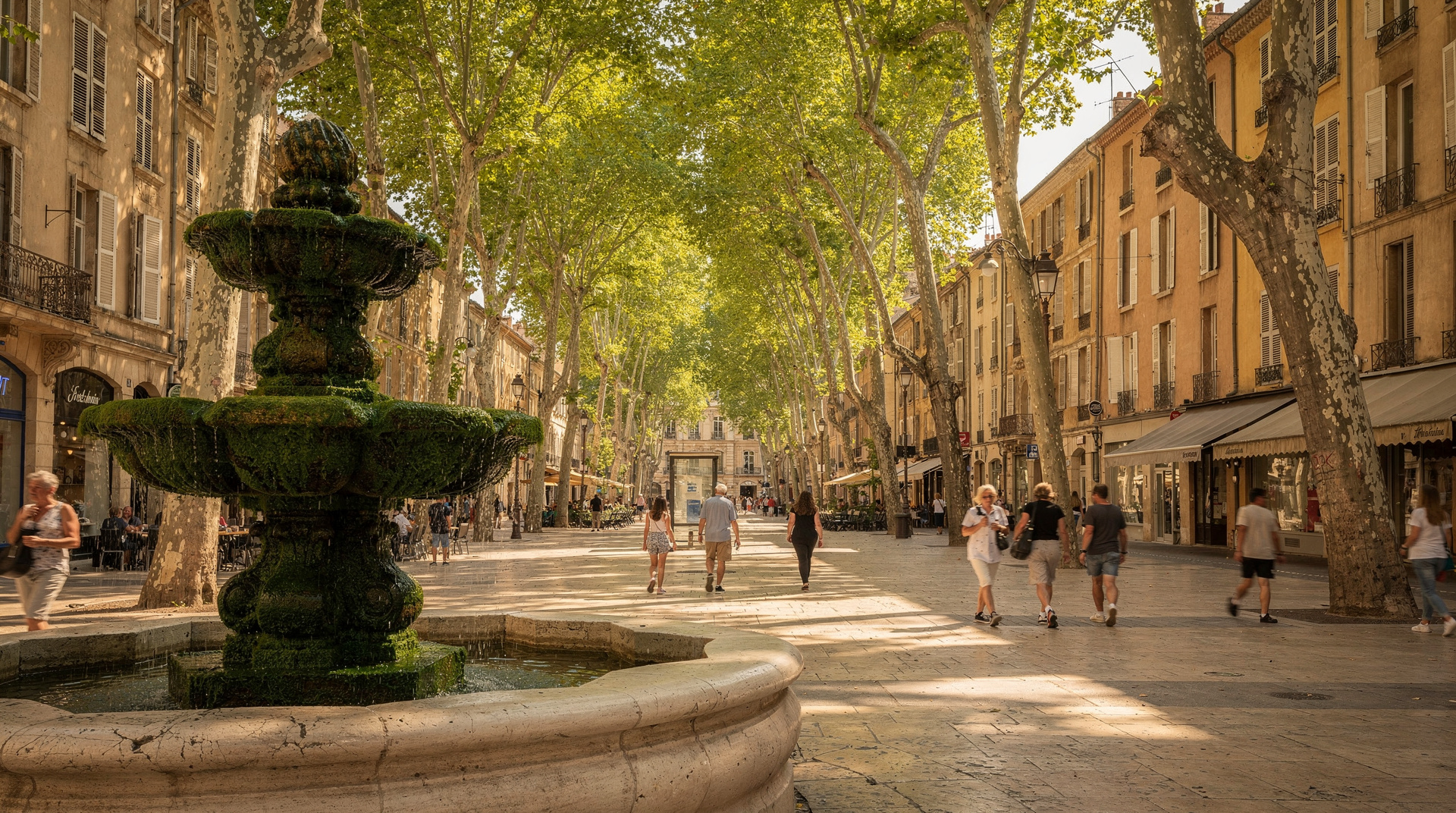
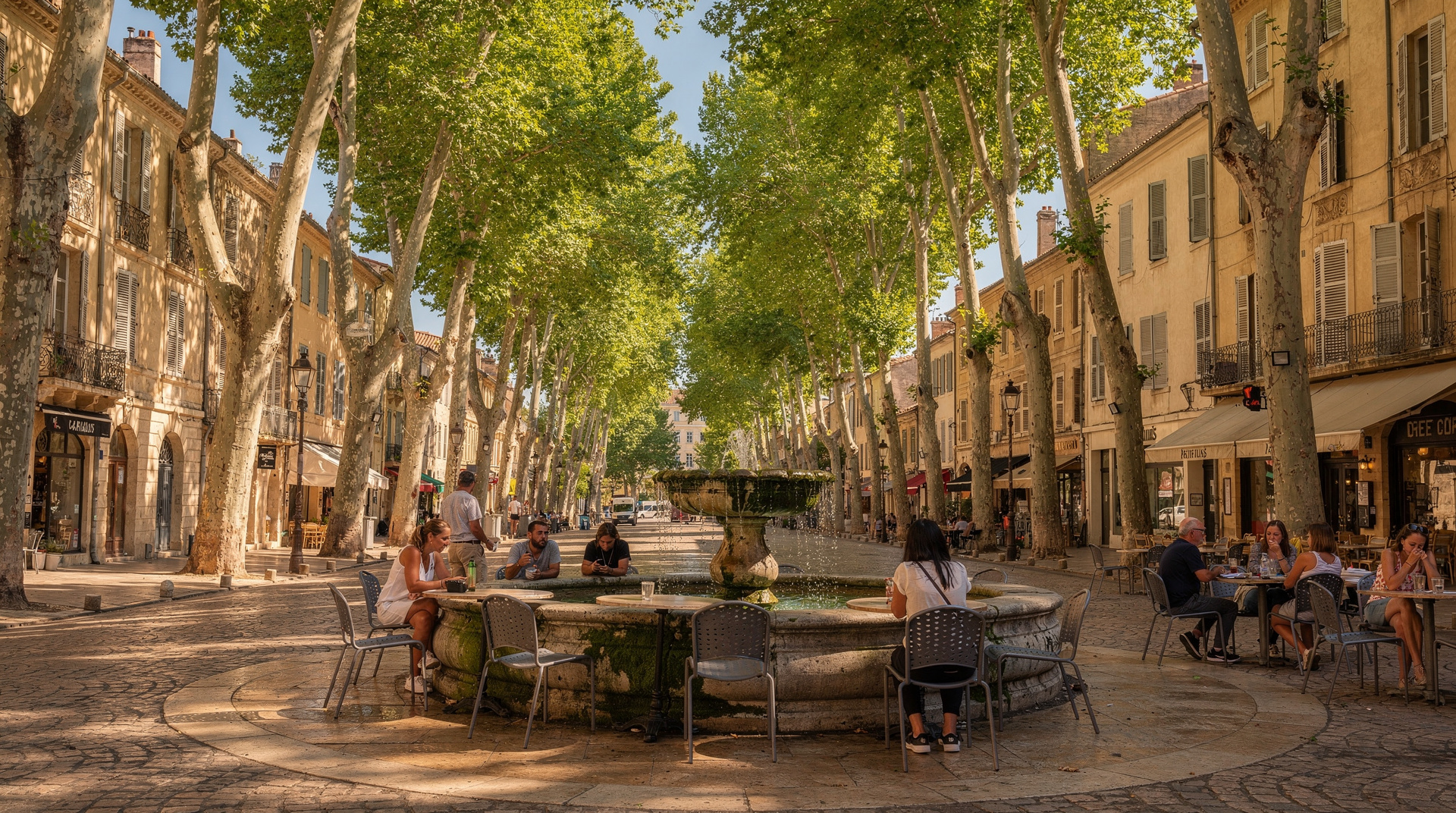
Check in, leave the bags, and walk immediately to the Cours Mirabeau. This is the instruction. The Cours Mirabeau at around 19:00 on an April evening, with the plane trees starting their spring leaf, the fountain playing at the far end, the café terrasses filling with university students and people ending their working week — this is the first proper Aix experience and it recalibrates everything about how you read the city.
Find a café table. Order a glass of Côtes de Provence rosé (specifically the Aix appellation — the local wines are underrated and cheap at source). Watch the Cours Mirabeau be itself for an hour.
Dinner: the old town streets behind the Cours Mirabeau have a concentration of good restaurants. We look for places with handwritten menus, modest tablecloths, and owners who look invested. In April, the restaurant scene is fully awake after winter. Budget EUR 35–45 per person for a proper three-course dinner with wine.
Saturday: the full day
7:30 — Cézanne’s Aix before the crowds
Paul Cézanne was born and lived most of his life in Aix. His obsessive relationship with the Mont Sainte-Victoire landscape is probably his most documented artistic preoccupation. The Cézanne trail — the official circuit linking his birthplace, his studio (Atelier Paul Cézanne), and the landscape he painted — works best in the early morning.
The Atelier Paul Cézanne on the Avenue Paul Cézanne opens at 9:30 in spring. The studio has been left approximately as it was when he died in 1906 — his tools, his still-life objects, his coat on the hook — and the experience of seeing the source objects for paintings you have seen in reproduction is quietly extraordinary. Book tickets online (they sell out in season).
Before the atelier, walk the old town lanes looking for the plaques that mark Cézanne’s relevant addresses. This is best done without a map — the lanes are small enough that getting slightly lost is not a problem.
9:30 — Market at Place Richelme
The Tuesday, Thursday, and Saturday morning market at Place Richelme is excellent on any of its days. On Saturday it is fullest. Arrive at 9:30 as the morning is getting going and the stalls have set up but the tourist groups have not yet arrived.
Buy provisions for a picnic: cheese, bread from the boulangerie on the corner, a bag of figs or strawberries or whatever the season offers (in April, the early tomatoes and asparagus; in September, the extraordinary Luberon fig production). Olive oil from a local producer. A small jar of tapenade.
The market extends into the surrounding streets and there are flower sellers and a small antique section on Saturday. Allow 90 minutes.
11:30 — The Cours Mirabeau, the fountains, the hôtels particuliers
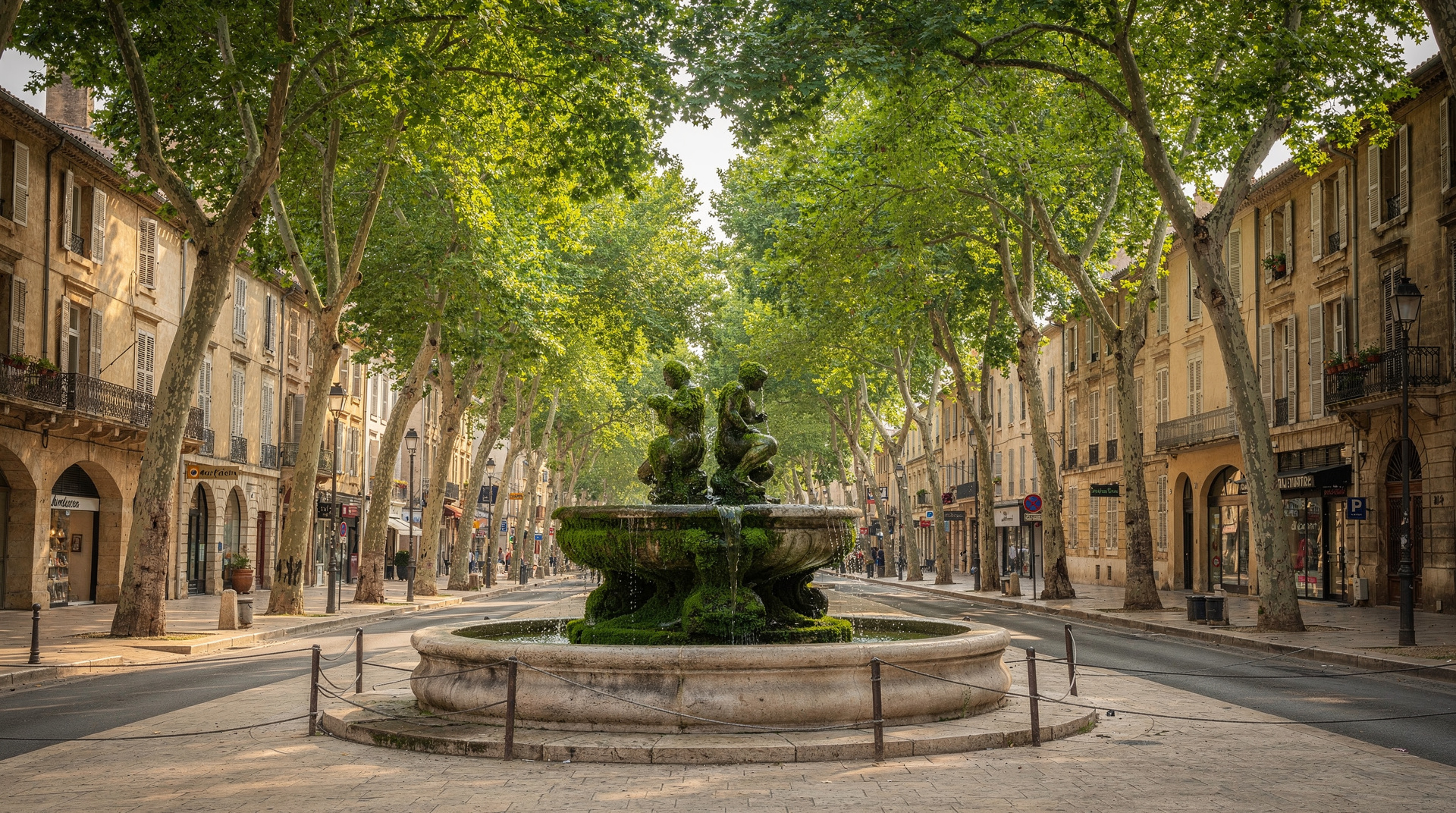
Walk the full length of the Cours Mirabeau from the Place du Général de Gaulle to the Place Forbin. The street is lined with plane trees and flanked by 17th- and 18th-century hôtels particuliers — the town houses of the Aix nobility — on the south side. Four fountains punctuate the length, including the Fontaine de la Rotonde (the large roundabout fountain at the western end) and the Fontaine Moussue (the 17th-century mossy warm-water spring fountain in the middle). The fontaine chaude runs at around 17°C year-round due to the thermal spring it draws from — stick a hand in.
13:00 — Picnic or lunch
The Parc Jourdan, a ten-minute walk from the Cours Mirabeau, is the correct picnic location: a shaded park with benches, used by Aix residents for exactly this purpose on market Saturdays. Alternatively, a restaurant lunch in the old town if the budget allows.
14:30 — The wine country
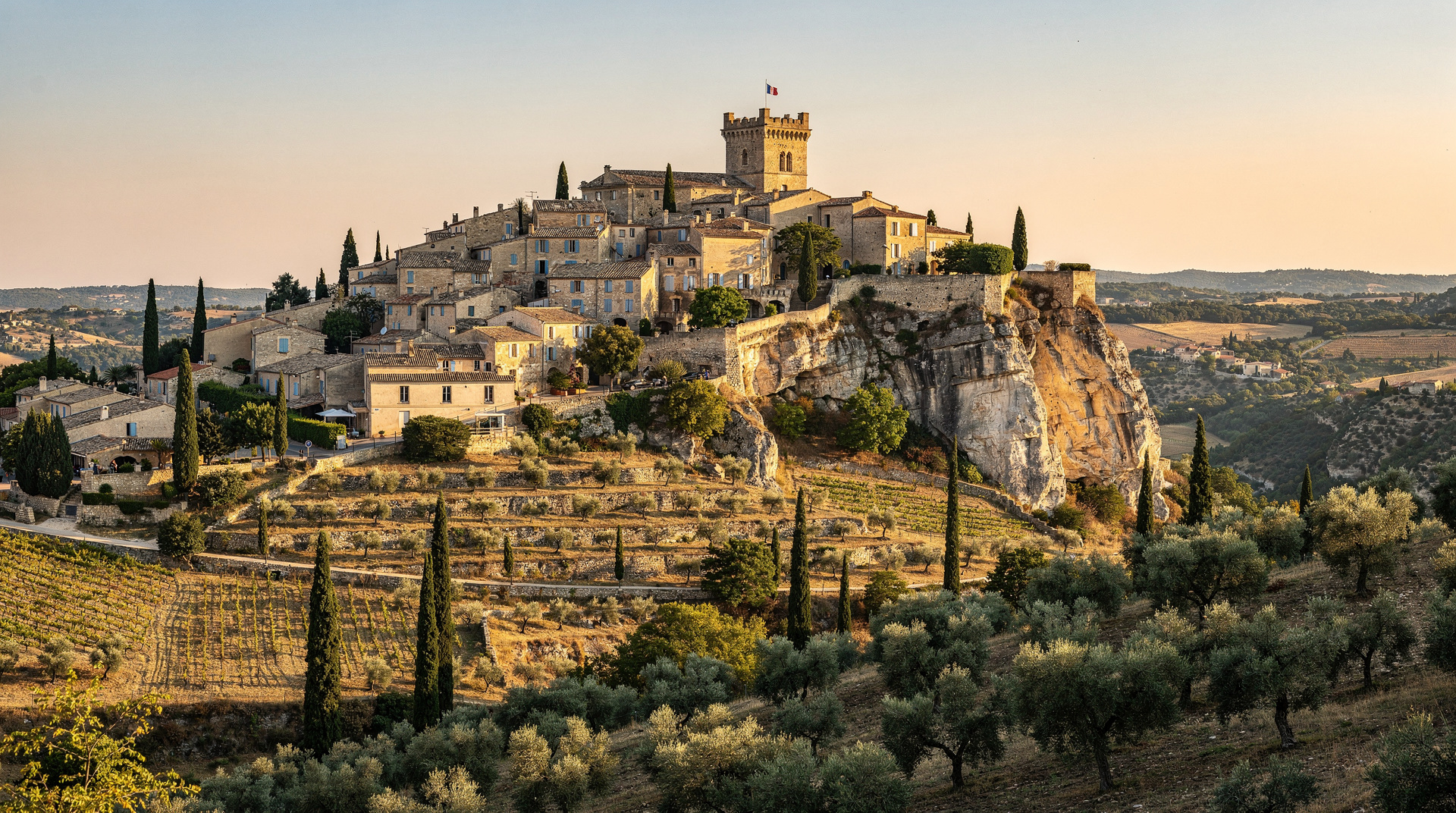
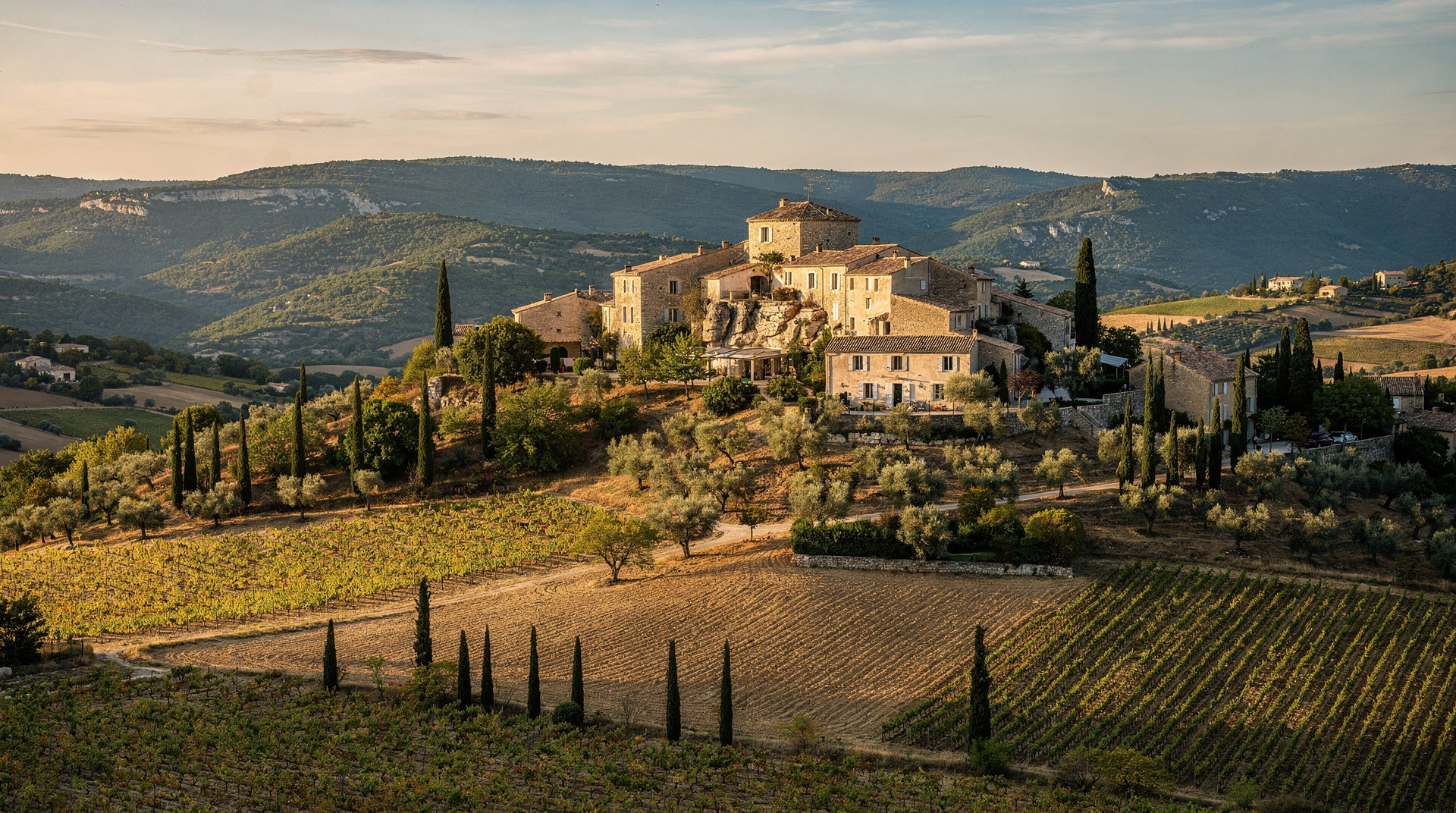
Aix is surrounded by vineyards. The Cézanne countryside — the hills and garrigue south and east of the city — produces wine under the Palette AOC (a very small appellation, two producers, concentrated and age-worthy reds and whites), the Coteaux d’Aix-en-Provence AOC, and increasingly the Sainte-Victoire AOC for the specific terrain around the mountain.
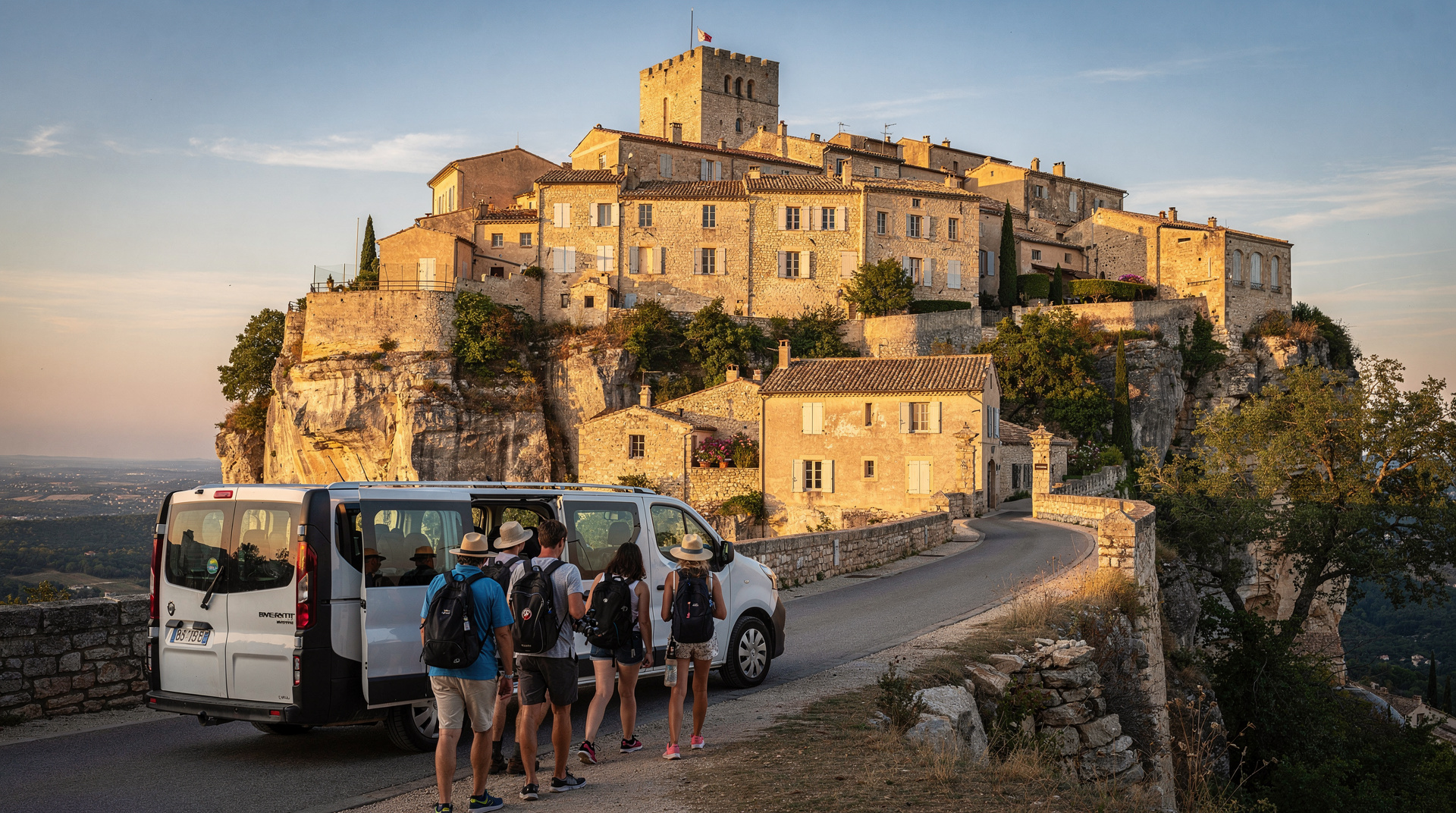
A half-day wine tour of the Cézanne countryside is one of the most satisfying things to do in Aix — the landscape that Cézanne painted obsessively is recognisable in the paintings and is even more compelling in person. Several operators run vineyard tours from Aix; some include a guided art-historical component linking the landscape to the paintings. Budget 3–4 hours.
If self-driving, the road toward Le Tholonet (east of Aix, toward the Sainte-Victoire) takes you through the landscape Cézanne walked daily.
18:30 — Return to town and aperitif
Return to Aix in the late afternoon, clean up, and return to the Cours Mirabeau for the aperitif hour. The calisson — the almond-and-melon paste confection that is Aix’s signature sweet — is available at every confiserie on the Cours Mirabeau and as a mid-evening nibble.
Saturday dinner: book in advance. The better restaurants in Aix fill on Saturday evenings, particularly in the spring and summer seasons.
Sunday: the quieter day
8:30 — The Granet Museum
The Musée Granet, in the former priory of the Knights of Malta, has a permanent collection that includes Cézanne (eight paintings, including studies of bathers and card players), European painting from the 16th to 19th centuries, and a substantial archaeology section with Celto-Ligurian sculpture from the pre-Roman oppidum at Entremont north of the city. This is a serious regional museum.
Open from 10:00, but the queue-free entry is in the first hour. Allow 2 hours.
11:00 — The smaller streets and the cafés
Sunday morning in Aix, with the market shut and the main tourist traffic not yet at full volume, is the best time to walk the grid of streets between the Cours Mirabeau and the Place de la Mairie. These are the working lanes of the old town — the bookshops, the boutiques, the patisseries where the Aix locals shop. The calisson shops are concentrated here; if you are taking any home, Sunday morning is when the stock is freshest.
12:30 — Lunch and train
A light Sunday lunch (a plat du jour and a glass of rosé) near the station neighbourhood, then the 14:00 or 15:00 TER back to Marseille. The journey is 40 minutes.
Practical notes
Getting there: TER from Marseille Saint-Charles, about 40 minutes, EUR 8–12 one way. Frequent service. The station in Aix is the Gare d’Aix-en-Provence, not the Gare TGV — check before boarding.
Where to stay: The old town is the only logical base. Hotels near the Cours Mirabeau are central and convenient; expect to pay EUR 100–200 per night in season for a mid-range option. Book early for spring and summer weekends — Aix fills quickly.
Budget: A generous weekend in Aix (hotel, two dinners, two lunches, market purchases, museum entry, wine tour) runs approximately EUR 400–600 per person at mid-range. The wine tour adds EUR 50–100 depending on the operator.
For more detail on Aix, the full Aix destination guide covers the city’s neighbourhoods, food, culture, and practical logistics. Day trip options combining Aix with the Luberon or the Calanques coast are in the day trips guide.
If your weekend is really one day
Weather, budget, or a late arrival can compress this into a single day. Prioritise the Cours Mirabeau walk, the Saturday market at Place Richelme, and one wine or Cézanne stop — not both. Cut the Musée Granet and the Sunday quiet-streets walk first; they benefit most from an unhurried second day. Our Aix day trip guide is built specifically for this shorter version.
Aix weekend vs. a Luberon weekend
Both are classic Provence weekends from a Marseille base, but they deliver different things. Aix gives you a real city — fountains, markets, museums, restaurants — with the Cézanne countryside as a half-day add-on. A Luberon weekend trades the urban energy for hilltop villages (Gordes, Roussillon, Ménerbes), lavender or vineyard landscapes, and a slower, more rural pace, but requires a car and more driving between stops. If you want walkability and a lively Saturday night, choose Aix; if you want ochre cliffs and village-hopping, choose the Luberon.
Building Aix into a longer Provence trip
If the weekend goes well, Aix makes a comfortable anchor for something bigger. Our Marseille, Aix and Cassis in three days itinerary strings the two cities together with the coast, and the Marseille and Provence five-day plan leaves room for a village or two as well. If you are still deciding where to sleep, staying in Marseille vs Aix lays out what each base gives you, and Marseille vs Aix-en-Provence compares the two cities head to head.
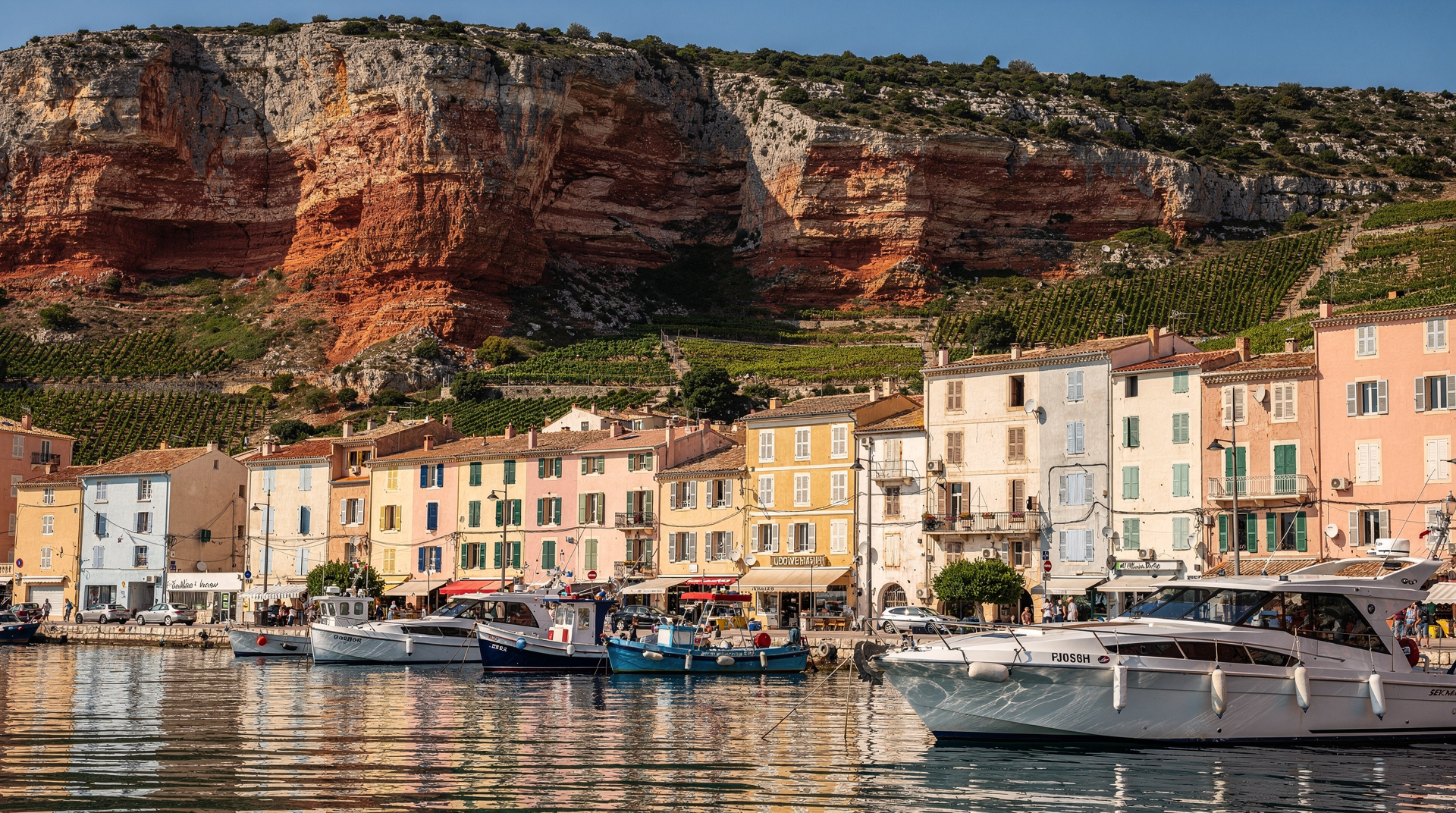
Getting between them is simple, and the train from Marseille to Aix guide covers the practical side. If you would rather add a seaside afternoon on the way home, Cassis and its day trip guide are the natural next step. For the wine side of the weekend, wine tasting near Marseille and Provence wine routes give more places to taste, and Provence rosé explained helps you order that café glass with a little more confidence.
If the weekend makes you want to see the rest of the region, read our Provence markets we love notes, or why Provence needs more than a day, for the same slow-travel logic applied to the whole region.
Frequently asked questions about weekend in Aix-en-Provence — our 48-hour plan
Is Aix-en-Provence worth a full weekend, or just a day trip? A day trip covers the Cours Mirabeau, the market, and the old town, but a weekend adds the early-morning Cézanne trail, the Musée Granet, and a proper Cézanne-countryside wine tour — all of which need more time than a single afternoon allows.
How do you get from Marseille to Aix-en-Provence? The TER regional train from Gare Saint-Charles takes about 40 minutes and costs roughly EUR 8–12 one way, arriving at the town-centre Gare d’Aix rather than the outlying Gare TGV.
Top experiences
Bookable activities with verified prices and instant confirmation on GetYourGuide.