Camargue 4x4 safari from Arles: our top pick reviewed
From Arles: half-day 4x4 Camargue safari
Duration: 4 hours
Into France’s only true delta wilderness
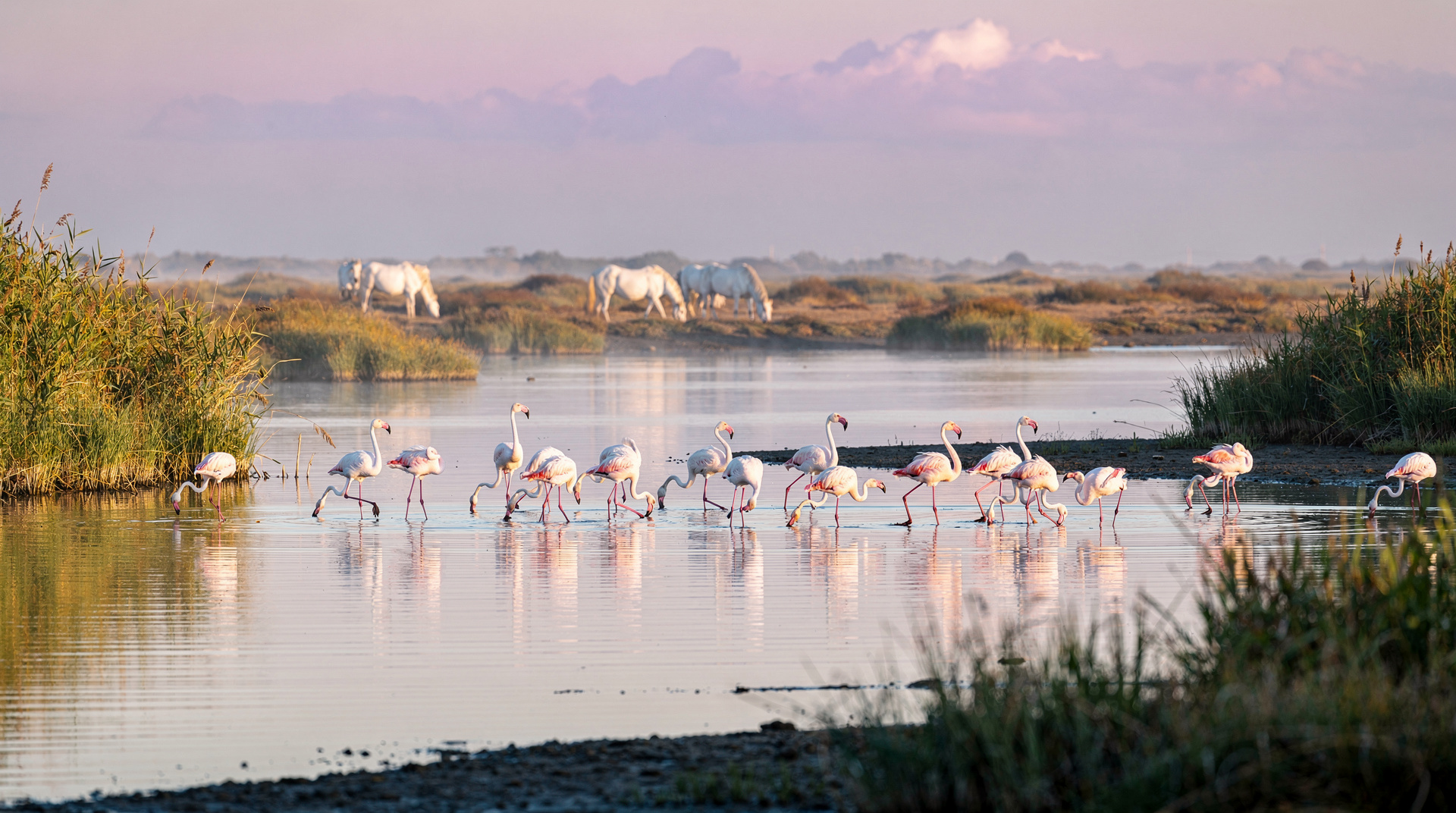
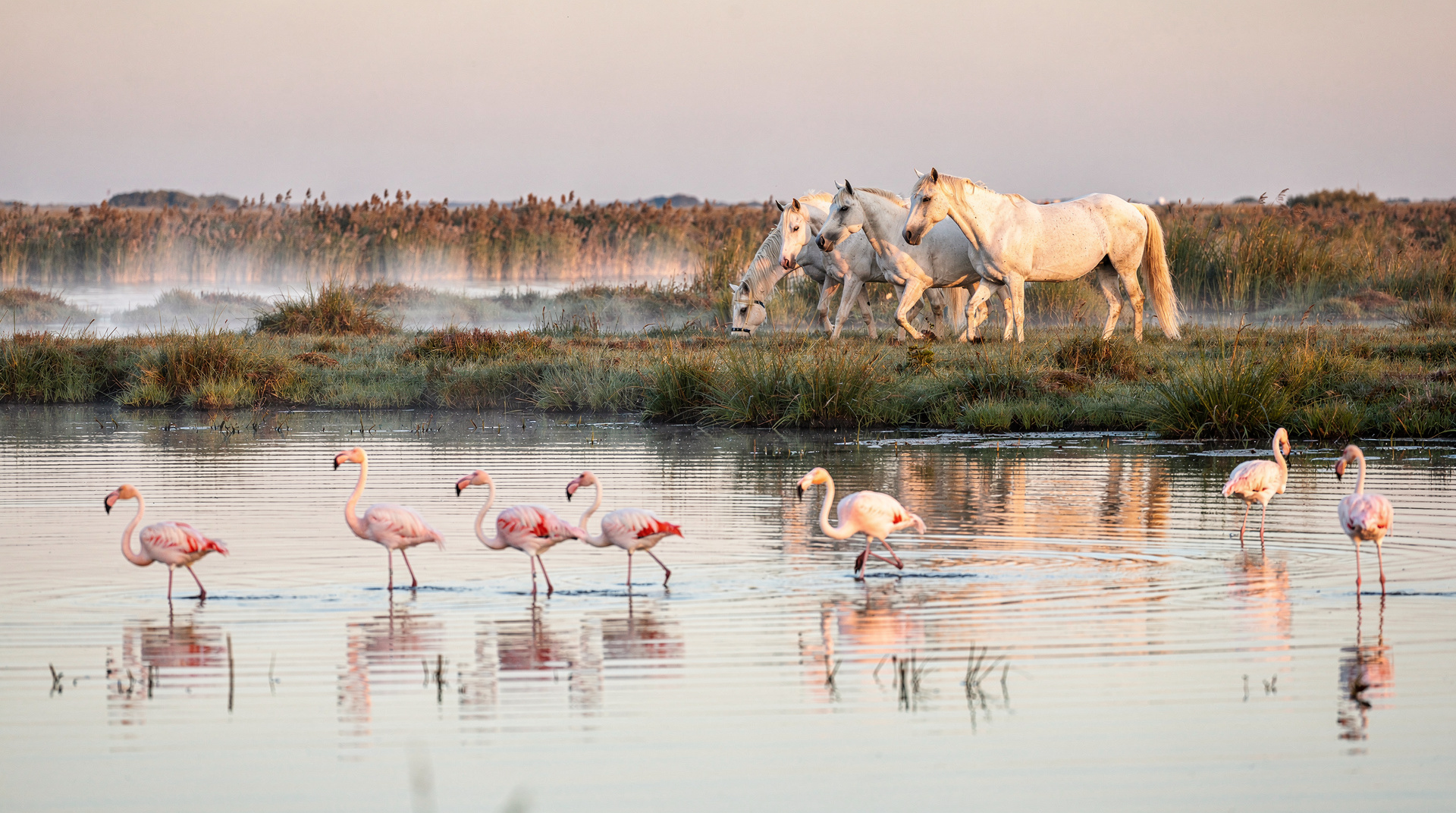
The Camargue is unlike any other landscape in France — a vast delta of the Rhône where the river meets the Mediterranean through 1,000 square kilometres of lagoon, marsh, and salt flat. White horses graze the reed beds, pink flamingos stand in shallow water, and black bulls wander the saltmarshes. The 4x4 safari from Arles accesses the tracks that standard vehicles cannot reach and puts you within metres of the wildlife.
Verdict: One of the most distinctive half-days available in the south of France. Not a polished luxury experience — it is bumpy, dusty, and sometimes insect-heavy — but the wildlife encounters are genuine and the landscape is remarkable. Combine with Arles itself (Roman monuments, Van Gogh history) for a full and varied day from Marseille.
What this tour includes
The half-day safari departs from Arles and drives south into the Camargue delta, using off-road tracks to reach areas inaccessible by normal vehicles. The route focuses on areas where white horses, flamingos, and bulls are most likely to be encountered.
Duration: 4 hours on the safari; half day total from Arles.
What is included:
- 4x4 vehicle and expert guide (specialist knowledge of the delta wildlife and ecology)
- Access to off-road tracks in the Camargue Natural Regional Park
- Wildlife viewing at close range (horses, flamingos, bulls as conditions allow)
- Environmental commentary on the Camargue ecosystem
What is not included:
- Transport to Arles (train from Marseille, approximately 1 hour)
- Meals or refreshments
- Entry to the Pont de Gau bird park (a separate attraction)
- Insect repellent — bring your own (essential in summer)
Group size: The 4x4 format means small groups — typically 6–8 passengers per vehicle. This allows genuine wildlife approach without large group disturbance.
Departure: From Arles. The train journey from Marseille takes approximately 1 hour by TER regional train. Multiple departures daily.
Why we recommend it
1. The Camargue is genuinely extraordinary. No other landscape in western Europe looks like the Camargue. The combination of flat delta, shimmering salt water, reed beds, and sky creates an almost abstract visual quality. In winter light or at sunrise, it is one of the great landscapes of France.
2. The 4x4 gets you off the road. The D570 coastal road and the walking tracks around Saintes-Maries-de-la-Mer give a surface-level view of the Camargue. The 4x4 safari goes where those roads do not — into the marsh interior, along the etangs (lagoons) where the flamingo colonies congregate, and across the salt flats where the bulls graze. The wildlife is accessible at this depth that tourists on foot or in standard cars never reach.
3. Flamingos at close range. Greater flamingos are present in the Camargue year-round, but the best concentrations are in the winter months (October to March). In high season they are more dispersed. The 4x4 allows approach to distances that produce genuine photography — not a distant pink smudge on the horizon.
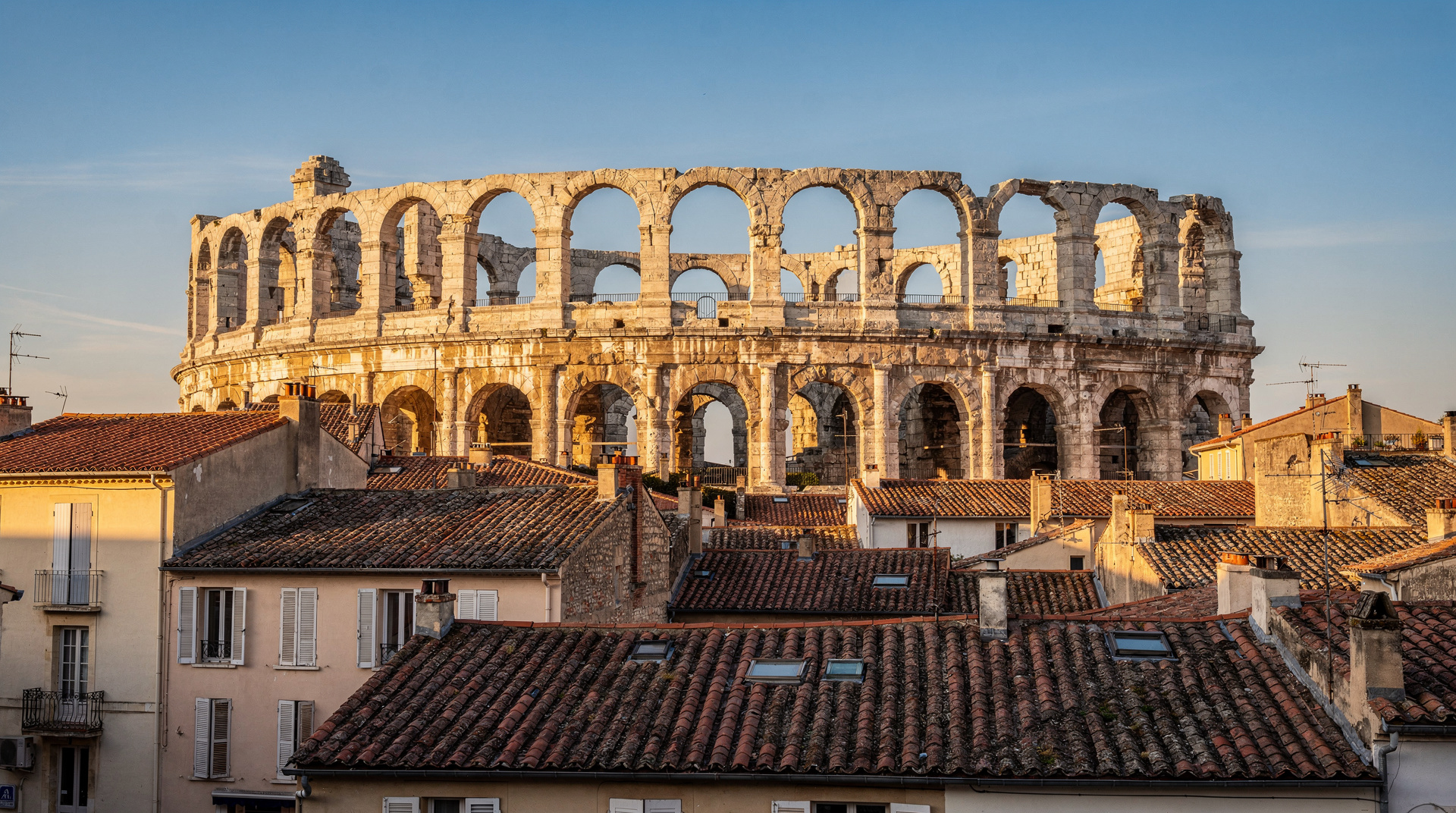
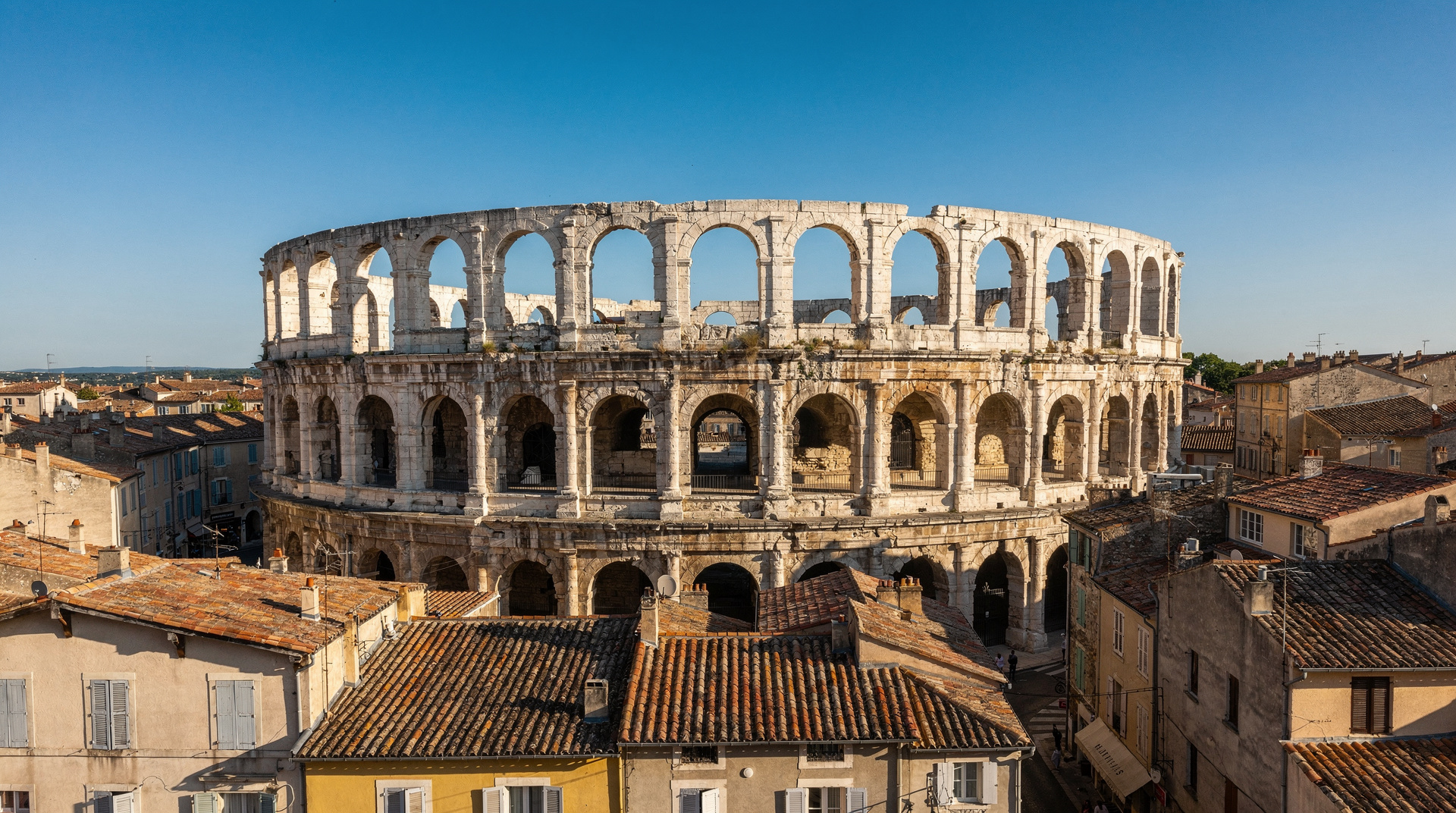
4. Arles is worth the trip independently. The Roman amphitheatre (one of the best-preserved in the world, still hosting bullfighting events in summer), Van Gogh’s footsteps walking trail, the Alyscamps necropolis, and the Musée Réattu add up to a genuinely excellent half-day in the city before or after the safari. A full day from Marseille (morning in Arles, afternoon safari) uses the time well.
5. Private format is available. Private safari bookings are available for those who want a more tailored experience — specific wildlife priorities, photography stops calibrated to your interests, or a route adjusted for children’s attention spans.
How it compares to alternatives
Avignon: Camargue tour with Pont de Gau bird park entry is the longer, more structured alternative: 9 hours from Avignon, covering the Camargue as a landscape tour with the Pont de Gau ornithological park (walkways and hides overlooking the lagoon) as the main wildlife destination. This is the better choice for dedicated birdwatchers — the Pont de Gau park has excellent infrastructure and year-round visibility of flamingos, herons, and waders. The Arles 4x4 safari is more physically immersive; the Avignon bird park tour is more comfortable and covers more ground.
For the Avignon day trip as a whole, see our Avignon day trip guide. For the broader Camargue context, see our Camargue day trip guide.
Practical info
Getting to Arles from Marseille: TER train from Marseille Saint-Charles, around 1 hour, trains run multiple times daily. Arles station is 10 minutes walk from the Roman amphitheatre and the old town. The safari typically departs from the Arles area — confirm meeting point when booking.
Mosquitoes: This is not a minor issue in summer. The Camargue wetlands breed significant mosquito populations from June through September. Strong repellent (DEET-based in high summer) is essential. Long sleeves and trousers in the early morning or evening help. The safaris are typically timed for morning (cooler, more active wildlife) which reduces but does not eliminate the mosquito issue.
What to bring:
- Insect repellent (high-DEET in summer)
- Sunscreen and hat (no shade in the delta)
- Binoculars (enormously enhance the flamingo and bird viewing)
- Camera with telephoto lens if wildlife photography is the priority
- Layered clothing — the delta can be cool in the morning and hot by midday
Best months: October to March for flamingo concentrations and manageable temperature. May and June for nesting season bird diversity. Avoid July–August if you are heat or insect-sensitive.
Accessibility: The 4x4 format involves some vehicle movement over rough terrain. Not suitable for those with serious back problems or difficulty with jolting movement. Check with the operator before booking.
Compare alternative tours
Frequently asked questions about Camargue 4x4 safari from Arles
What wildlife do you see on the Camargue 4x4 safari?
The Camargue is home to three iconic species: white Camargue horses (a semi-wild breed, the oldest documented in Europe), flamingos (greater flamingo, present year-round but most visible October to March), and black Camargue bulls. Beyond these three, the delta wetlands support 400+ bird species including avocets, egrets, herons, and migrating waders. The 4x4 format allows access to tracks impassable by standard vehicles, reaching the most remote flamingo colonies.How long does it take to get from Marseille to Arles for the safari?
Around 1 hour by train from Marseille Saint-Charles to Arles (TER regional train, not TGV). Several departures daily. The half-day safari from Arles takes 4 hours, making this a full-day commitment from Marseille: 1 hour train each way plus 4 hours safari plus time at Arles station.What is the best time of year for the Camargue safari?
October to March is best for flamingos — the birds concentrate in larger numbers in the cooler months and are more visible in the lagoons. May–September is best for nesting season activity and the widest variety of visible bird species. July–August is hot (35–38°C) and mosquitoes are significant — insect repellent is essential. Winter visits offer the best wildlife sightings but can be cold and occasionally very windy.Are Camargue white horses really wild?
Semi-wild — they live in manades (herds) on the delta marshes and are managed by gardians (the Camargue cowboy tradition). They are not domesticated in the traditional sense, but they are not entirely wild. The animals visible from the 4x4 are typically at close range — the wetland tracks bring the vehicle within metres of grazing herds.Is the Camargue safari suitable for children?
Yes — the 4x4 safari is suitable for children aged 5 and over. The vehicle movement is bumpy on marsh tracks; younger children may find the sustained jolting tiring. The wildlife encounters (horses, flamingos, bulls at close range) are genuinely exciting for children. Bring insect repellent and sun protection.What is the difference between the Arles safari and the Avignon Camargue bird park tour?
The Arles 4x4 safari goes off-road into the delta wetlands for a wildlife immersion experience — bumpy, dusty, and close to the animals. The Avignon tour with Pont de Gau bird park entry covers the Camargue more as a landscape tour, with the bird park (a managed reserve with walkways and hides) as the main wildlife stop. The Avignon tour covers more ground (full day, 9 hours); the Arles safari goes deeper into one specific area.Are flamingo sightings guaranteed?
The Camargue has one of the largest flamingo colonies in Europe — sightings are extremely likely year-round. The size and proximity of the visible flock depends on season and daily conditions. In winter, thousands of flamingos concentrate in the shallow etangs visible from the delta tracks. In summer, they disperse and may be seen at greater distance. The guide will know where the most recent sightings have been.Are the white Camargue horses wild?
The white horses are semi-wild — they live in managed herds on private land within the delta and are not domesticated. They are free-roaming within their herd territory. Encounters are common along the delta tracks and are not staged or managed for tourists. If you want to ride one, horseback excursions operate from Saintes-Maries-de-la-Mer — a different experience from the 4x4 wildlife viewing.Can I combine the safari with Saintes-Maries-de-la-Mer?
Saintes-Maries-de-la-Mer is the main village at the heart of the Camargue — a Provençal beach town with a pilgrimage church, a small beach, and a Gypsy culture connection. It is 40 km from Arles. Some full-day Camargue tours include a stop there. The half-day safari from Arles typically does not go that far south. For a full Camargue experience including Saintes-Maries, a full-day tour from Avignon is the more appropriate choice.What should I do if I get car sick?
The 4x4 movement on delta tracks is rougher than a standard road — some passengers with car sickness sensitivity experience discomfort. Take medication before boarding if you are prone to motion sickness. The front seat (if available) is less prone to movement. Inform the guide — they can adjust the route to smoother tracks if necessary.Is there a toilet on the safari?
No — the safari goes into remote wetland territory. There are no toilets on the tracks. Use facilities in Arles before departure. The guide will include a stop at a point with facilities if the tour runs 4+ hours.